Most of the dental marketing writing on the web is written by dental marketing agencies. It is useful, but it is written to sell marketing. This page is written by people who buy it. If you own a practice, we think that is the more useful voice to have on your side when you are deciding where the next pound of marketing budget should go.
The honest start
First, is marketing actually the problem?
The call we take most often from a practice owner starts with a version of the same sentence. We are spending money on Google Ads and on SEO and on the new website, and the diary is still not where it should be. The owner wants a better agency. In nine cases out of ten, the agency is not the issue. The issue sits further upstream, in one of three places.
The first is case acceptance. If every new patient who walks in is treated like a check up, your marketing budget is paying to acquire patients who will spend 70 pounds and leave. The treatment the practice is capable of delivering is not being presented. No agency on earth can fix that from the outside, because the problem is not awareness, it is conversion inside the room.
The second is fees. If the fees are set below what the market would carry for the clinical quality on offer, the marketing is working harder than it needs to and the profit per patient is lower than it should be. More patients at the wrong price is a tiring way to run a practice.
The third is reception. The enquiries are landing. The team on the phone is not converting them. A good test: ask a friend to call the practice at a busy time and ask about a specific private treatment. If the person who answers cannot articulate the next step with warmth and confidence in under 90 seconds, your agency is not the problem, your front desk is.
If any of these three things are true, fix them before you buy more marketing. Marketing applied to a leaky bucket is one of the most expensive mistakes we see in UK dentistry.
The right order
What to work on, in which order
If you had to prioritise the inputs to practice growth from a pound spent today, this is the order that has held up over 30 years of running our own practices and coaching other owners through theirs.
- Patient journey and case acceptance. The clinical consultation, the treatment coordinator role, the way options are presented, the way fees are talked about. Nothing you buy later matters as much as this. More on this inside the practice coaching work.
- Reception and enquiry handling. Who answers the phone, how enquiries are logged, how fast they are followed up, how a web form becomes a booked consultation. A spreadsheet showing enquiry source, treatment type, status and value is more useful than most reports an agency sends.
- Google Business Profile and reviews. Still the single highest return channel for most local practices. Owned, free to maintain, and underused by almost everyone. A well kept profile with 150 recent reviews beats an aggressive paid campaign in a lot of UK markets.
- Website that converts. Not the prettiest website in the industry. The one that loads fast on a phone, says clearly what the practice does, shows the team, shows the fees honestly, and makes booking a consultation take two taps. Beauty is a bonus. Conversion is the point.
- Local SEO. The long slow investment that outlasts every change in Google Ads pricing. It takes 6 to 12 months to show, but once it works, it works for years and does not stop when the budget pauses.
- Google Ads. Fastest to switch on, fastest to switch off, and the easiest place to burn money with no accountability. Useful. Rarely the first move. Almost never the only move.
- Paid social and content marketing. Helpful for cosmetic practices with a clear aesthetic and a steady photo pipeline. Secondary for most general practices unless the budget allows for both this and the items above.
An agency will usually try to sell you the things lower down this list first, because they are easier to deliver and bill for. The things higher up require you to change what happens inside the practice, which is not an agency's job.
If you are buying marketing
How to brief a dental marketing agency without wasting the budget
Most briefs we see when owners come to us for a second opinion look like this: we want more patients, we want more private treatment, and we want to be number one on Google. That is not a brief. That is a wish list. A brief that an agency can actually act on, and that you can hold them to, has three parts.
1. The specific treatment and the specific patient
Not all dental marketing. All implant marketing to patients aged 45 to 65 within a 10 mile radius who have expressed interest in replacing a missing tooth. The narrower the brief, the better the campaigns, and the clearer the reporting at the end of each month.
2. The target cost per enquiry and cost per booked consultation
If you do not know yours, work it out before you sign. For most UK general dental marketing, a cost per enquiry of 15 to 40 pounds and a cost per booked consultation of 60 to 150 pounds is a sensible starting range. Specialist treatments (implants, Invisalign, full mouth rehab) sit higher. If the agency does not want to report in these terms, keep looking.
3. What happens between enquiry and consultation
The owner's half of this contract. The receptionist is briefed, the follow up system is in place, the enquiries are tracked, and the agency gets honest feedback on what is landing. Without that, the agency is firing into fog and will quietly stop reporting on conversion metrics, because they cannot see them.
The scoreboard
What good marketing reporting looks like
A marketing report should answer three questions in two minutes. Did we get more enquiries this month than last. Did those enquiries turn into booked consultations. Did those consultations turn into accepted treatment, and if so, what was the total value against what it cost to acquire them.
If the report is 14 pages of impressions, click through rates and keyword position tables, that is a reporting style designed to look like value rather than show it. Impressions do not pay the mortgage. Booked consultations do. Any agency worth its retainer can report to the practical questions above; most just need to be asked to.
Where the budget leaks
Five places UK practice owners lose money on marketing
In order of what we see most often.
- Paying for a brand new website every three years. A good website should last five to seven. If an agency is persuading you otherwise, ask what is actually broken on the current one. Most redesigns we see are driven by taste, not performance.
- Running Google Ads with no landing page. The ads send clicks to the home page. The home page talks about everything. The ads convert at a third of what they should. A dedicated landing page per treatment type is the single highest leverage change in most paid campaigns.
- Running Google Ads on brand name alone. You are paying Google to show your own practice name to people who were already searching for you. Occasionally defensible, usually not.
- Chasing social media follower counts. A practice with 1,200 engaged local followers who book treatment beats one with 42,000 global followers who do not. The vanity metric is not the growth metric.
- Buying every acronym that is new. AEO, GEO, AI search optimisation, voice SEO. Some of this matters. Most of it in UK dentistry today is dressed up as a reason to raise the retainer. If an agency is leading the pitch with the acronym rather than the enquiry number, the acronym is probably not the thing you need.
The practical answer
The one or two things that nearly always work
If you asked us to name the two moves that have raised more private revenue across more UK practices than anything else, they would be these.
First, invest in treatment presentation and the Treatment Coordinator role. This is not marketing in the strict sense, it is the thing that makes marketing pay. The practices we have supported where this is strong get three to five times the private revenue per enquiry of practices where it is weak. A fuller view of this sits inside case acceptance coaching.
Second, treat Google Business Profile and reviews as a weekly discipline. Reply to every review inside 24 hours. Add two photos a week. Post one update a week. Ask for a review from every patient who has had treatment. This takes 20 minutes a week and outperforms a lot of paid media over 12 months.
If both of those are already in place and running well, then the conversation shifts to the specific paid channels and the agency choice. If they are not in place, do them first and spend less on paid for six months while they take.

If you want to think about this with us
What next
We do not sell marketing services. We coach owners on how to think about marketing well, how to brief it and manage it, and how to make sure the rest of the practice is set up to turn marketing enquiries into revenue. The programme that covers this most directly is High ROI Marketing, and it usually runs alongside the broader business coaching for owners.
If you would like a first conversation about whether marketing is actually your issue right now, or whether something else inside the practice is the thing to work on first, the phone below is a good place to start.
A separate but connected piece we get asked about often is the practice manager role. Marketing cannot carry a practice where reception standards slip, consultations get bumped, or the enquiry handoff is messy. All of that sits with the manager.
Before adding spend to the top of the funnel, we usually ask owners to look at the back door first. The arithmetic of patient retention is more generous than most marketing budgets realise.
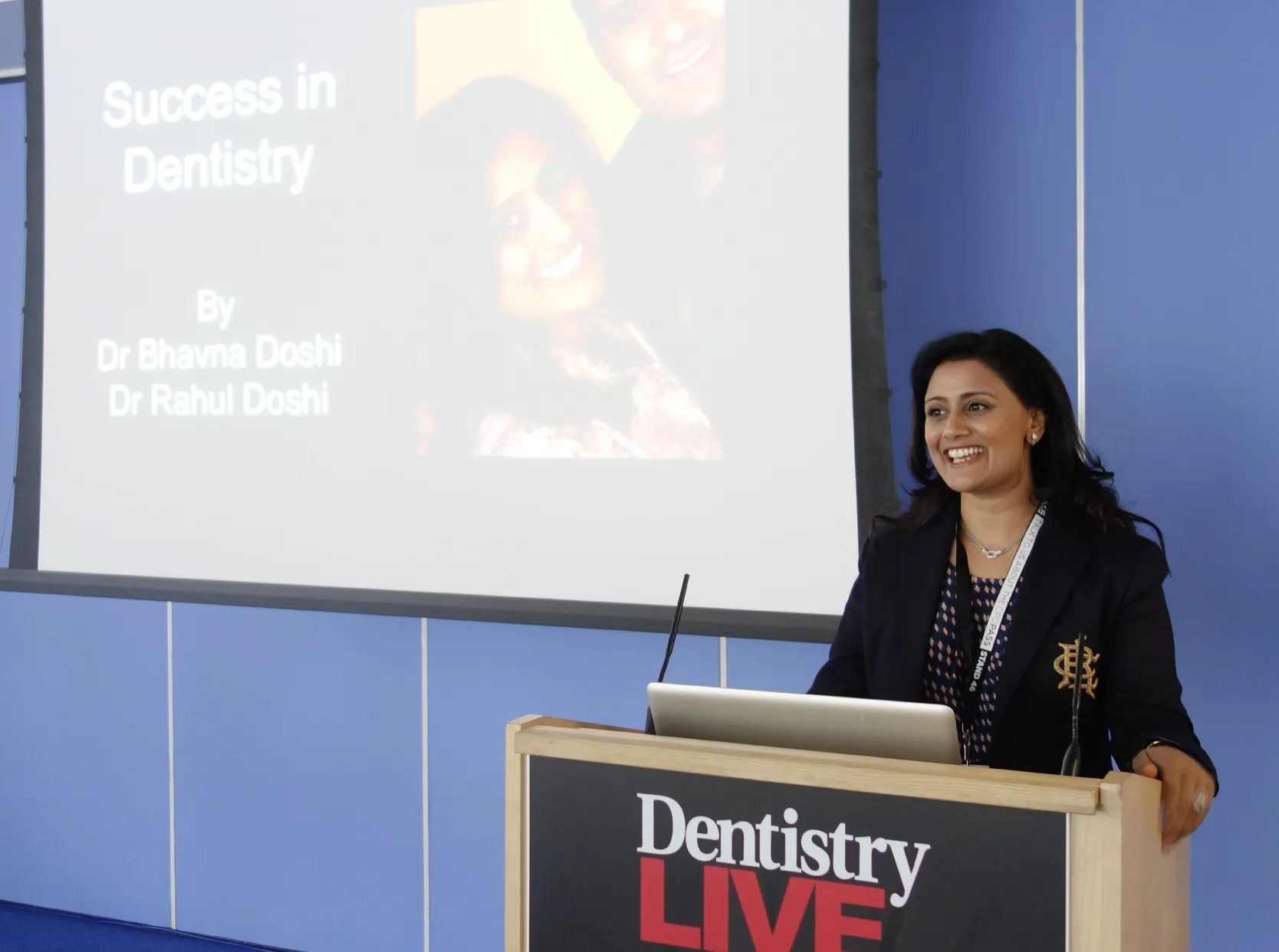
Rahul and Bhavna Doshi, Dental Wealth Builder
Call 01992 878030