How to Build a Dental Practice That Runs Without You

>£225 million
additional profit created across DWB client practices
30 years
experience as owners of group practices
200+
dental practices coached worldwide
Ask most practice owners what their business is worth. The number in their head usually assumes they are still standing behind the chair. Still running the diary. Still answering every difficult question personally.
Ask a buyer the same question, and the answer looks quite different. A buyer values the practice, as it would run the day after the current owner leaves for good, not the day before.
That gap between the two numbers is where most of the disappointment in a sale process actually comes from, and it rarely shows up until the negotiation is already underway. We have managed and exited multiple premium dental and healthcare practices ourselves, including their former dental practice, Studios, so we have sat on both sides of that particular gap. We have also coached a great many practice owners through the same transition over the years that followed.
The principle underneath both is the same. A practice sells for what it is worth without you. Not what it is worth with you working every hour available.
This guide sets out what a self-managing dental practice actually requires. It draws on DWB's own financial framework and a real coaching story to show what changes when an owner takes principal independence seriously, years before any sale is on the table.
What "runs without you" actually means to a buyer
A self-managing practice is not one where the owner never works. It is one where the income, the systems and the patient experience do not collapse the moment the owner is unreachable for a week.
Buyers pay premium multiples for transferable value. A business that stops the day the owner walks out is not really transferable at all. It is a job with a lease attached, and buyers price that risk in, whether or not a seller mentions it.
Dental practice principal independence is built the same way team accountability is built. Gradually, through structure and delegation. Not declared all at once in the year before a sale.
A useful early test is simple enough to try this week. Could the practice run for a fortnight if you were somewhere remote with no phone signal at all? If the honest answer is no, that is exactly where the real work begins.
The lesson most owners resist
A DWB coaching client arrived at this lesson from his own side of the table. His established, successful practice had quietly plateaued. In his words, when you plateau, you are effectively going backwards.
Wanting more personal time and a proper exit strategy before retirement, Napier made a shift. It had nothing to do with fees or marketing. He started making decisions like a business owner, rather than a clinician who happened to own the building. His story is here.
That mindset shift is precisely what a buyer pays a premium multiple for. It applies whether the seller is one of our clients or one of us.
Reducing genuine owner dependency is the biggest driver of value in a sale. It is also the slowest one to build. That is exactly why the work needs to start years ahead, not months.
The view from the other side of the table
We have also spent real time on the buyer's side of these conversations. a DWB founder spent five years as Clinical Strategy Development Director for Dentex, helping grow the group toward around 180 practices. We have both judged the National Private Dentistry Awards for close to two decades.
That vantage point shows repeatedly which practices attract serious buyer interest. It also shows which ones get discounted hard in negotiation. It is rarely about the dentistry itself.
It is about whether the systems, the team and the numbers can stand on their own. Whether they can do that without the person selling the practice standing behind them in every conversation.
A brilliant principal with no bench strength behind them is a real risk to a buyer. Sometimes a bigger one than a good, consistent team with no single star performer. Clinical reputation matters, but it rarely stands on its own.
What your EBITDA is actually telling you
Most owner dentists perform substantial clinical work themselves. Most do not treat that work as a cost on the practice's own profit and loss. That gap matters more than it looks.
A replacement associate dentist would typically cost approximately 50% of the clinical fees they generate. DWB's normalised EBITDA figure reflects that reality directly. It deducts 50% of owner-generated clinical income as an operating expense.
The figure also adds back genuinely personal costs: a car, conference travel, GDC fees, indemnity, and similar items. Anything that would not recur under new ownership gets added back to give a truer picture of the underlying business.
Without that adjustment, EBITDA looks artificially inflated. That can mislead a strategic decision long before any sale is even under discussion. The adjustment simply creates a realistic picture of what the practice would cost to run if the owner stepped back from clinical work. It separates the job from the business underneath it.
Most established dental practices achieve valuations between four and seven times normalised EBITDA. Where a practice sits in that range depends heavily on location, patient demographics, the NHS-to-private mix, and how well-documented the operational systems already are. Stronger practices, with cleaner systems and less owner dependency, tend to command the premium multiples toward the top of that range.
A worked example makes the mechanism clearer. A practice with £160,000 in normalised EBITDA, valued at a six-times multiple, would be worth approximately £960,000. That single number, six times rather than four or seven, is doing an enormous amount of work in the outcome.
Improving normalised EBITDA itself changes the picture again, separately from any change in multiple. Moving normalised EBITDA from £160,000 to £200,000 could support a materially higher valuation. That assumes a five-to-seven-times multiple range applies consistently to the improved figure, rather than being mixed with figures drawn from a different range entirely. Better EBITDA performance and a stronger multiple are two separate levers, and confusing them leads to unreliable numbers.
DWB's own Snapshot tool tracks this weekly, alongside profit and practice exit value, rather than leaving an owner to reconstruct the picture from memory. An owner works from current numbers this way. That is a meaningfully different habit from forming a rough guess at the end of a busy quarter, once the accountant's figures finally land.
An illustrative example and what it does not include
The Standard requires financial illustrations in DWB content to separate operating profit earned before a sale from value created at the point of exit, rather than blending the two into one number. The example below follows that separation deliberately, precisely because the two kinds of benefit behave differently and should never be added together carelessly.
Consider a practice that improves its maintainable profit by £50,000 a year. Assume that improvement is sustained consistently over three years, purely as an illustration of how two different kinds of benefit can stack on top of each other. That improvement accumulates to £150,000 in additional operating profit across the three years. This figure sits entirely separate from any change in the practice's eventual sale price and is simply cash the practice generated and kept along the way.
Applying an illustrative seven-times exit multiple to that same £50,000 annual improvement in maintainable profit suggests something else again: a potential exit value uplift of around £350,000. This second figure is counted separately from the £150,000 in accumulated operating profit described above it. One is money already earned. The other is a change in what a future buyer might pay.
Added together, and only as an illustration rather than a forecast for any specific practice, the two figures suggest a potential combined financial benefit of roughly £500,000 across the three-year period. This example deliberately excludes tax, transaction costs, financing terms and any buyer-specific adjustments. All of these materially affect a real outcome. None of them are reflected in the illustrative number above, which exists purely to show the shape of the argument, rather than to predict an actual sale price for any specific practice.
The point of the illustration is not the specific number, which will differ for every real practice. It is the underlying shape of the argument. Genuine operating improvement tends to pay twice: once while the practice is still owned and run day to day, and potentially again if the practice is eventually sold at a stronger multiple.
What actually builds transferable value?
None of this is about timing a sale perfectly. It is about building a practice that would be worth buying on any given Tuesday, years before an owner has any real intention of selling.
The owners who get the best outcomes are rarely the ones who found a clever trick at the last minute. They are the ones who ran the business properly for long enough that a sale became a formality, rather than a scramble.
That means genuine, maintainable profit. Not one good year engineered to look attractive right before a sale process starts.
It means developed associates who can diagnose and present treatment confidently, rather than clinicians waiting to be told what to do. It means a patient journey that stays consistent across the whole team, not dependent on which dentist happens to be in the room that day.
And it means systems that are documented and actually followed. Not a folder of policies anybody ever opens after the day it was written.
The biggest mistake we see is trying to make one year's accounts look attractive, rather than building genuine, sustained performance over several years. Buyers and their advisers look past a good final year for evidence of a trend. A sudden improvement right before a sale tends to invite more questions, not fewer, and rarely holds up under real scrutiny.
Where owner dependency still hides
Reception often becomes a hidden dependency point. It quietly routes every slightly unusual question straight to the owner, rather than resolving it locally on the spot.
A documented decision framework closes that gap faster than most owners expect. It only needs to cover the handful of situations that come up repeatedly, not every possible scenario.
Clinical decision-making is the second common hiding place. If every complex treatment plan still needs the owner's personal sign-off, the practice has not really reduced its dependency at all. Not in any way that matters to a buyer, whatever the org chart happens to say on paper.
Financial oversight is the third. A practice where only the owner understands the numbers struggles to demonstrate sustainable performance. That applies whether the audience is a buyer, a bank, or the owner's own future self during a quiet, reflective moment.
Where to start
Pick the single decision that currently routes back to you the most often. Build a documented process for handling it without your direct involvement, then actually test it.
Review your own normalised EBITDA honestly, including the owner adjustment. Work from that figure, rather than the headline number your accountant produces each year without the same adjustment applied.
A self-managing dental practice is not built in a single year. It is not built by working harder personally either. If anything, working harder personally usually moves a practice in the opposite direction, since it quietly reinforces the very dependency you are trying to remove.
It is built by systematically removing the points where the business currently depends on one person being present. One decision, one conversation and one documented process at a time.
If you would like a clearer, current picture of where your own practice actually stands and what would genuinely need to change to reduce that dependency, get in touch with DWB. We can help you work out exactly where to start.


Categories

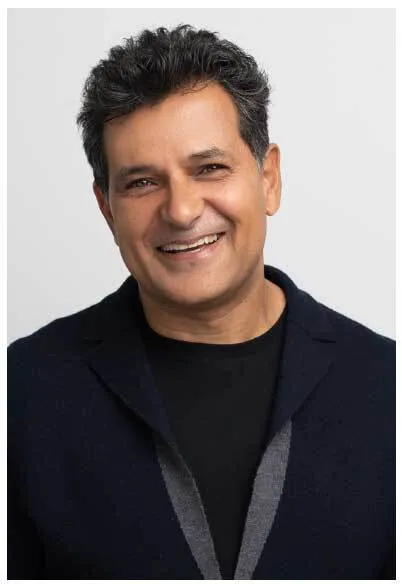
Dr Rahul Doshi is a leading UK cosmetic dentist, entrepreneur and former Clinical Director of Dentex/PortmanDentex, with 25+ years of experience in dentistry and practice growth. As co-founder of Dental Wealth Builder, he helps dentists, practice owners and dental groups build profitable, scalable and high-performing businesses… Know more
Turn This Into a Plan for Your Practice
Reading is a start. The DWB Growth System turns it into a structured, step-by-step plan built around your practice, so you know exactly what to focus on first and why. No generic playbook, no pressure to sign up, just a clear path built for where you are right now.
About the Author
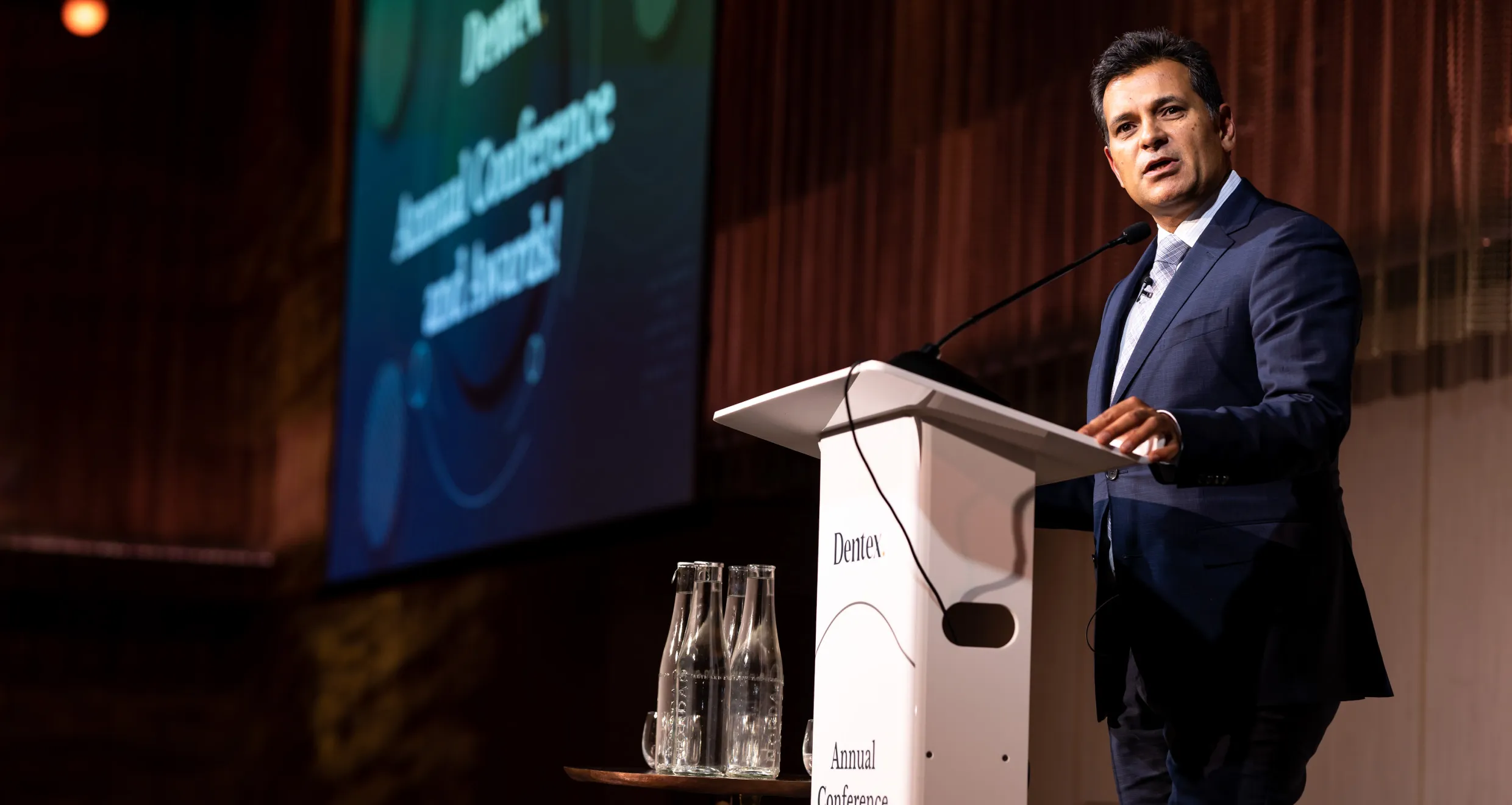
Dr Rahul Doshi
Dr Rahul Doshi, BDS (Lond.), LDSRCS (Eng.), is one of the UK’s most influential figures in cosmetic, comprehensive and business-led dentistry.
Widely recognised as one of the key dentists who helped introduce cosmetic dentistry to the UK over 25 years ago, Rahul is the founder of The Perfect Smile Studios and the Advanced Training Institute, where he trained dentists in Interdisciplinary Comprehensive Dentistry, including smile design, occlusion, treatment planning, full-mouth rehabilitation and advanced restorative care.
His experience extends far beyond clinical dentistry. Rahul has owned, led and scaled multiple award-winning dental practices, giving him first-hand insight into what it takes to build profitable, high-performing and team-led dental businesses. This practical experience now underpins his work with dental practice owners, multi-practice owners and dental groups who want to improve profitability, strengthen systems and scale with greater confidence.
Rahul has held several major leadership positions within the profession. As Clinical Director for Dentex Healthcare and later PortmanDentex, he helped support the growth and scaling of the group from inception to 185 practices, contributing strategic clinical leadership across one of the UK’s major dental organisations. He was also Clinical Director of the monthly dental publication Premium Practice Dentistry and a founding board member of the British Association of Private Dentistry.
A Past President of the British Academy of Cosmetic Dentistry, Rahul has been a long-standing judge for the Private Dentistry Awards and Dental Industry Awards. He has also been voted one of the UK’s Top 50 most influential dentists and recognised by his peers for his outstanding contribution to cosmetic dentistry.
As an inspirational national and international speaker, Rahul has lectured on cosmetic dentistry, smile makeovers, treatment planning, laser dentistry, leadership and practice growth across the UK, United States, UAE, Italy, India, Germany, Sweden and South Africa.
His work and expertise have been featured widely in national and international media, including the BBC, ITV, The Times, Daily Mail, The Guardian, Evening Standard, Marie Claire, Tatler and leading dental publications.
As co-founder of Dental Wealth Builder, Rahul now uses his rare combination of clinical excellence, entrepreneurial experience, multi-practice scaling and large-scale group leadership to help dentists, practice owners and dental groups build more profitable, scalable and rewarding businesses.