How to Create Accountability Without Micromanaging

>£225 million
additional profit created across DWB client practices
30 years
experience as owners of group practices
200+
dental practices coached worldwide
You leave the building for two hours and come back to a small crisis. A message went unanswered, a follow-up call never happened, a simple task drifted because nobody quite owned it. The instinct that follows is familiar to most practice owners: check in more, ask more questions, look over more shoulders.
That instinct usually makes the problem worse, not better. A team that is watched constantly stops thinking for itself, because thinking for itself was never really required of it. It waits to be told instead.
At Dental Wealth Builder, we coach practice owners through exactly this tension. Real accountability and constant supervision are not the same thing. Confusing them is one of the most common ways a good leader accidentally builds a dependent team, without ever intending to.
This guide sets out the difference, and the delegation habits that actually build accountability. Two real coaching stories show what changes when an owner learns to let go properly, rather than reflexively.
The difference between accountability and supervision
Supervision is watching to see whether something gets done. Accountability is a team member owning the outcome, whether or not anyone happens to be watching at all.
A supervised team performs well when the owner is present, and drifts the moment they leave. An accountable team performs consistently either way. The standard was never really about being observed. It was about what the role actually requires, day in and day out.
Dental team accountability systems fail most often not because owners care too little, but because they try to build it through more checking rather than through clearer expectations set up front. Checking harder treats a structural gap as though it were a trust problem, when the two actually require completely different fixes. Confusing them wastes a great deal of energy that could go somewhere more useful.
A useful test is to ask what would happen if you were unreachable for a full week. If the honest answer is that very little would function properly, that is rarely a comment on the team's ability. It is usually a comment on how much of the practice's accountability currently lives inside one person's head.
What micromanagement is actually protecting against
Nobody sets out to micromanage. It grows out of a genuine worry: if I do not check, something will slip, and I will be the one who answers for it.
That worry is often accurate in the short term. Something probably will slip the first few times a task is properly handed over. The mistake is treating that early wobble as proof the team cannot be trusted. It is really just the normal, unavoidable cost of building a new habit properly.
A practice that never tolerates the early wobble never gets past it. The owner keeps stepping back in. The team keeps waiting to be rescued. The pattern repeats indefinitely, and everyone involved quietly concludes it is simply how the practice works.
Accountability in dental practice settings is built in exactly those uncomfortable early weeks. It is not skipped over by an owner who takes the task back the moment things get slightly harder. Tolerating a small mistake now prevents a much larger one later. That larger mistake tends to arrive once something more serious has been quietly delegated without proper support behind it.
The delegation conversation that changes everything
Most micromanagement usually starts right at the moment of delegation itself, often without anyone consciously noticing it is happening at all. "Just figure it out" sounds efficient, but in practice it hands over a task without handing over any real clarity about what success actually looks like.
"Here's the outcome I need, let's talk through how" does something different. It sets the destination clearly, then invites the team member into the thinking about how to get there. Nobody is left guessing what the owner secretly wanted all along.
The team member still does the actual work. The difference is that they do it knowing what they are aiming for. That single piece of clarity is precisely what makes it possible for the owner to step back afterwards without anxiety.
Modelling this cuts both ways, and the owner's side of it matters just as much. When an owner gets something wrong, "I got that wrong, here's what I'd change" does far more for a team's trust than staying silent and hoping nobody noticed. A leader who owns a poor scheduling decision openly makes it easier for the whole team to own their own mistakes the same way, rather than quietly hiding them.
What this looked like inside a real practice
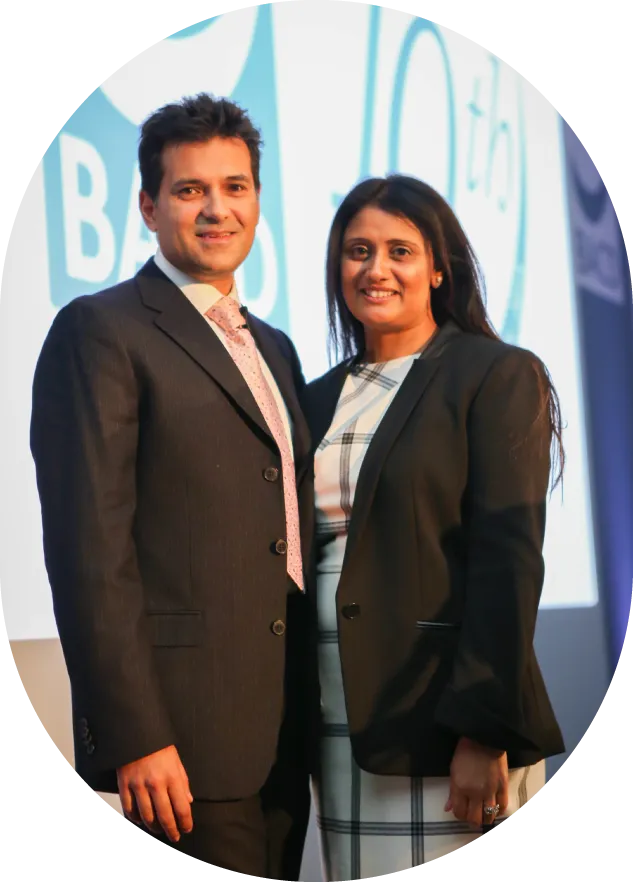
Raj Patel and another DWB coaching client Patel came to DWB coaching after trying several courses that had not moved the needle. In their own words, they were stuck in micromanagement, with no clear sense of how to actually give the team more genuine ownership of their own work.
DWB's coaching started with leadership development, before any marketing tactics were introduced at all. That order matters. another DWB coaching client's patient communication became, in her words, personalised rather than scripted. Structured goal-setting was introduced for the couple and the wider team together, so everyone was working from the same picture of where the practice was heading.
A year into coaching, Raj described seeing progress every week. Small, clear changes in how they led shifted the whole practice environment, and the shift went further than either of them expected going in.
The team did not suddenly become more capable overnight. They were finally being trusted to use the capability they already had, which is a very different thing from acquiring new skill. Their story is here.
Letting go without letting go of standards
a DWB coaching client came to coaching with a different problem: an established practice that had plateaued. In his own words, he felt the practice was plateauing, and his concern was that plateauing is effectively going backwards.
Part of the work was a genuine mindset shift, from a practitioner's instinct to control every decision personally, toward a more business-focused way of leading. Napier described it directly. The shift coming was learning to be more business-focused in his own decision-making, rather than reflexively clinical about everything.
His team engaged with the change faster than expected. That was credited partly to the fact that both DWB coaches have run their own dental practices, and understood the transition from the inside rather than from theory. His story is here.
Letting go of day-to-day control did not mean lowering the standard the practice worked to. It meant building the infrastructure underneath it: roles, systems and a clearer decision-making structure across the practice. The standard could then hold without the owner personally enforcing every part of it, every single day.
Building the structure that makes stepping back possible
Accountability needs somewhere to actually attach itself. Without a defined owner for each task, "the team" ends up responsible for everything in general and nobody in particular. In practice, that functions exactly the same as nobody being responsible at all.
A weekly review of visible numbers helps here far more than an owner's memory ever does. When a team member can see their own results without being told, they tend to take more ownership of moving them. The owner spends far less time playing the role of memory and enforcer for every task in the building.
This does not need to be complicated to work. A simple shared spreadsheet, reviewed together rather than checked privately by the owner, does most of the heavy lifting. The visibility itself is what changes behaviour, not the sophistication of whatever tool happens to hold the numbers.
Roles matter alongside numbers. A written role that names who owns a decision removes the ambiguity that quiet resentment tends to grow in. Two team members both assuming a task belongs to the other person is a structural gap, not a character flaw in either of them. It closes the moment someone actually writes the ownership down properly.
A brief weekly check-in protects the structure once it exists. Five minutes spent asking what is on track and what is not costs very little, and it catches a drifting task while it is still small and easy to fix. Skipping that habit is usually how a workable system quietly stops working within a few months.
When accountability breaks down anyway
Sometimes a deadline is still missed, even with clear ownership already in place. "This is unacceptable" ends the conversation there and then, and quietly teaches a team member to hide the next problem rather than raise it early.
"What got in the way, and how do we fix it?" keeps the conversation focused on the actual obstacle. Often the honest answer reveals a genuine structural gap rather than a lack of effort, and fixing the structure prevents the same deadline from being missed again next month.
Closing that conversation well matters just as much as opening it well. "Thank you for being honest, what do you need going forward?" leaves the door open for the next honest conversation. Ending with "let's just move on" instead quietly punishes this one, and teaches the team to say less the next time something goes wrong.
None of these scripts are about lowering the standard the practice holds. All of them are about getting an honest account of what actually happened, which is the only information that lets an owner fix the real problem rather than guessing at it from a distance.
Where to start this week
Pick one task you currently check on more than the role actually requires. Hand it over properly, with a clear outcome rather than a vague instruction attached to it, and then genuinely leave it alone for a week.
Expect an early wobble somewhere along the way. That wobble is not evidence the system does not work. It is the normal, uncomfortable cost of a team learning to own something it was never previously allowed to own in the first place.
Resist the urge to quietly take the task back the moment that wobble appears. Coach through it instead, using the same language covered above, and treat the stumble as information rather than as a verdict on the whole experiment.
Real accountability in a dental practice is built this way. It comes together one properly delegated task at a time, not installed all at once through a new policy document nobody reads twice.
If you want structured support building this into your own practice, book a practice coaching call with DWB. We will help you find exactly where to start, and what to hand over first.


Categories


Dr Rahul Doshi is a leading UK cosmetic dentist, entrepreneur and former Clinical Director of Dentex/PortmanDentex, with 25+ years of experience in dentistry and practice growth. As co-founder of Dental Wealth Builder, he helps dentists, practice owners and dental groups build profitable, scalable and high-performing businesses… Know more
Turn This Into a Plan for Your Practice
Reading is a start. The DWB Growth System turns it into a structured, step-by-step plan built around your practice, so you know exactly what to focus on first and why. No generic playbook, no pressure to sign up, just a clear path built for where you are right now.
About the Author
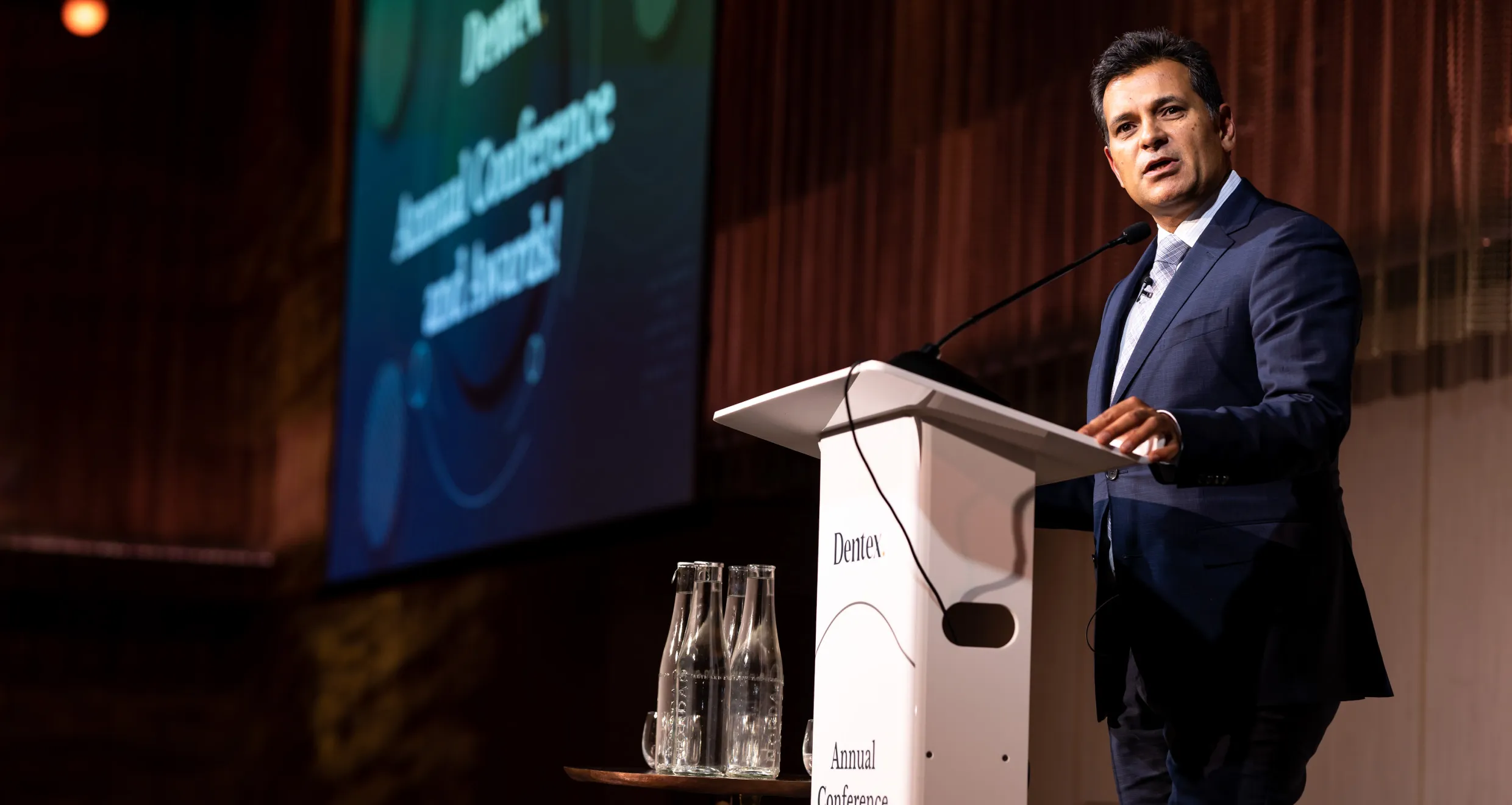
Dr Rahul Doshi
Dr Rahul Doshi, BDS (Lond.), LDSRCS (Eng.), is one of the UK’s most influential figures in cosmetic, comprehensive and business-led dentistry.
Widely recognised as one of the key dentists who helped introduce cosmetic dentistry to the UK over 25 years ago, Rahul is the founder of The Perfect Smile Studios and the Advanced Training Institute, where he trained dentists in Interdisciplinary Comprehensive Dentistry, including smile design, occlusion, treatment planning, full-mouth rehabilitation and advanced restorative care.
His experience extends far beyond clinical dentistry. Rahul has owned, led and scaled multiple award-winning dental practices, giving him first-hand insight into what it takes to build profitable, high-performing and team-led dental businesses. This practical experience now underpins his work with dental practice owners, multi-practice owners and dental groups who want to improve profitability, strengthen systems and scale with greater confidence.
Rahul has held several major leadership positions within the profession. As Clinical Director for Dentex Healthcare and later PortmanDentex, he helped support the growth and scaling of the group from inception to 185 practices, contributing strategic clinical leadership across one of the UK’s major dental organisations. He was also Clinical Director of the monthly dental publication Premium Practice Dentistry and a founding board member of the British Association of Private Dentistry.
A Past President of the British Academy of Cosmetic Dentistry, Rahul has been a long-standing judge for the Private Dentistry Awards and Dental Industry Awards. He has also been voted one of the UK’s Top 50 most influential dentists and recognised by his peers for his outstanding contribution to cosmetic dentistry.
As an inspirational national and international speaker, Rahul has lectured on cosmetic dentistry, smile makeovers, treatment planning, laser dentistry, leadership and practice growth across the UK, United States, UAE, Italy, India, Germany, Sweden and South Africa.
His work and expertise have been featured widely in national and international media, including the BBC, ITV, The Times, Daily Mail, The Guardian, Evening Standard, Marie Claire, Tatler and leading dental publications.
As co-founder of Dental Wealth Builder, Rahul now uses his rare combination of clinical excellence, entrepreneurial experience, multi-practice scaling and large-scale group leadership to help dentists, practice owners and dental groups build more profitable, scalable and rewarding businesses.