Dental Patient Communication Training: The Skills Dental School Never Taught You

>£225 million
additional profit created across DWB client practices
30 years
experience as owners of group practices
200+
dental practices coached worldwide
Dental school teaches you to diagnose, plan and treat. It rarely teaches you what to say when a patient goes quiet after hearing a number. It rarely teaches you how to explain a full-mouth rehabilitation to someone who has never heard the term before.
That gap shows up early in a career and never really closes on its own. Dental patient communication training fills it. Not with a script, but with a way of running the conversation that most dentists were simply never shown.
The gap dental school leaves behind
Dental training necessarily prioritises clinical competence, so many dentists enter practice feeling less prepared for complex patient conversations than for clinical procedures.
Many dentists end up developing patient communication by trial and error, on real patients and under real time pressure. That can produce good habits, but it can also leave avoidable gaps.
It also means years of inconsistent conversations and missed cues. Treatment plans get presented well clinically and still never quite land the way they were intended to. Patient communication skills dentistry actually rewards are learnable far faster than that. Someone simply has to teach them properly, rather than leaving them to accumulate by accident over a decade of trial and error.
What communication training actually covers
Good training goes well beyond “be nice to patients.” It covers foundational verbal skills, telephone training, and how a consultation is structured from the first hello to the final recommendation.
It also covers what DWB calls the Communication Journey. This breaks the entire patient interaction into its smallest components, so trust and value can be built deliberately, rather than hoped for on the day.
Non-verbal communication gets less attention than it deserves in most training. Posture, tone, pacing and where you sit in the room all shape whether a patient feels informed or talked at. A dentist who explains a plan perfectly while checking the clock every few seconds undoes most of the value of the explanation itself, without realising it.
Sitting at eye level rather than standing over a reclined patient changes the whole tone of a conversation, and so does simply slowing down. Patients may absorb less than a rushed clinician assumes, particularly when unfamiliar terms such as “rehabilitation” or “periodontal” appear without explanation. Often the answer is a more deliberate sequence and better use of the time already available.
Listening matters just as much, and the research on dentist-patient communication points the same way. Let the patient finish, then say back what you heard before you answer. It takes ten seconds. Most patients will correct you at least once, and that correction is usually the real reason they came in.
The DWB 4C Framework

DWB teaches a simple structure for the patient conversation, called the 4C Communication Framework. Connect, Clarify, Consider, Commit.
Connect means establishing genuine rapport before any clinical content enters the conversation. Clarify means confirming what the patient actually wants, in their own words, before presenting a recommendation.
Consider gives the patient room to weigh their options without being rushed toward a decision. Commit is the final stage, where readiness gets checked rather than assumed.
Four short questions capture the whole framework in practice.
● Have I truly connected with this patient?
● Have I clarified what matters most to them?
● Have I helped them consider their options clearly?
● Have I asked for their commitment with confidence?
Answering all four, in that order, changes a conversation more than any single clever phrase could. It is the difference between a checklist and an actual sequence a patient can feel.
How Do You Talk About Money Without the Awkwardness?
Money is where most consultations wobble. The dentist explains the plan well, then mentions the fee quickly, a bit apologetically, and looks down at the notes. Patients read that as doubt. State the fee once, calmly, then stop talking. The silence feels long to you and perfectly normal to them. After that, ask what they make of it so far.
Personalised, not scripted
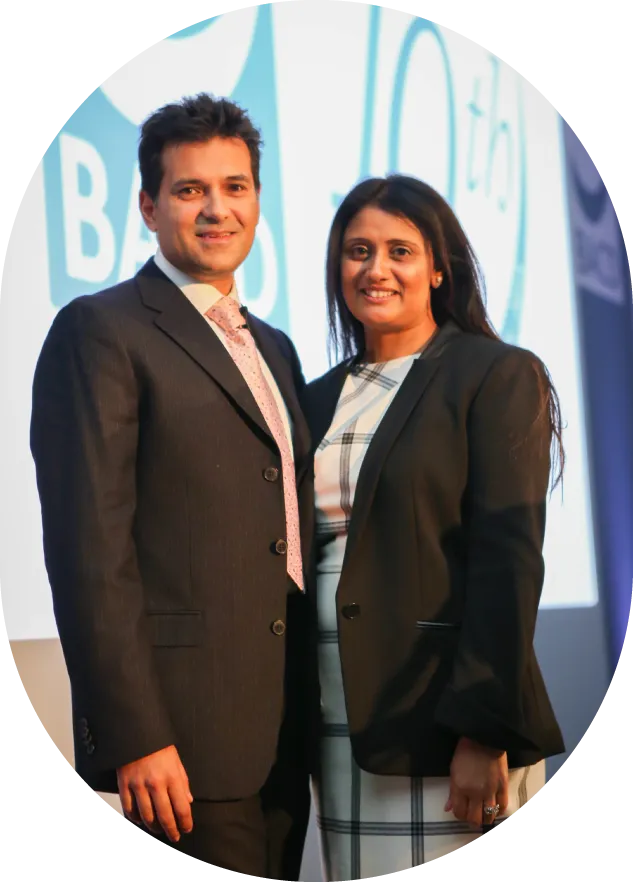
Dr Raj Patel and Preanka Patel arrived at DWB coaching convinced they had a marketing problem, when the real issue turned out to be sitting somewhere else entirely. Preanka was stuck in micromanagement, unsure how to hand real responsibility to her team, and their communication with patients had grown scattered rather than deliberate over time.
DWB's coaching started with leadership development for dental practices, not marketing tactics.
Once that shifted, Preanka's patient communication changed alongside it. Her conversations became personalised rather than scripted, the kind patients describe as genuine rather than rehearsed. Raj puts it simply: “leadership was such a core part of the programme.” Small, clear changes shifted the whole practice environment.
A year in, the couple describe seeing progress every week. The lesson generalises well beyond their practice. A script can carry the right words. It cannot carry warmth, and patients notice the difference immediately, even when they cannot explain exactly what felt different about the conversation.
Bringing the patient into the decision
Dr Neresh Behari and Dr Usha Ramjas ran successful practices in Hampshire and West Sussex, with strong clinical training behind them. Patient communication and case acceptance were not matching the quality of the dentistry, though.
DWB introduced Co-Discovery consultations. This is a structured way of involving patients directly in their own treatment decisions, rather than presenting a finished plan and waiting for a yes. Alongside a treatment coordinator and diary zoning by treatment complexity, the shift changed how patients experienced the whole conversation.
Dr Behari now calls the treatment coordinator “the essential bridge between us, the dentists, and our patients.” Fifteen years later, he describes the broader change as “probably the single most important thing I have done in my professional career.”
That is a striking thing to say about a communication process rather than a clinical technique. It says a great deal about how much the conversation itself was actually costing the practice before anyone addressed it directly.
Why this training pays for itself
Communication training rarely gets budgeted the way clinical CPD does, because its value is harder to see on a single day.
The value shows up over months instead. Plans get accepted the first time they are presented. Patients return for their next check-up without needing to be chased. A dentist ends a consultation feeling like the conversation actually landed, rather than wondering what was missed.
Priti Patel's experience illustrates the scale of that value well. She moved into a treatment coordinator role from dental nursing, with, in her own words, no real direction beforehand.
Trained into a proper communication process, rather than left to develop one alone, her first case as a TCO was a £10,000 plan. The practice had previously struggled to get patients past £2,000. Four years on, she had a £45,000 case in progress.
Building the skill deliberately
Roleplay is one of the more uncomfortable parts of communication training, and also one of the most useful. Practising a difficult conversation with a colleague first exposes exactly where the wording breaks down. The stakes stay low enough to fix it before a real patient is in the room.
DWB builds roleplay into its coaching deliberately, using a structured checklist rather than leaving it to improvisation. A team member plays the hesitant patient, another practises the response, and a third gives feedback against specific criteria rather than a general impression. Repeated roleplay makes the language easier to use consistently when a real patient conversation becomes difficult.
A telephone template, used consistently with every new patient enquiry, does something similar for the very first touchpoint a practice has with someone. Many practices do not have one written down.
The ones that do tend to notice how much of a first impression was previously left to whoever happened to answer the phone that day. A well-handled first call sets the tone for every conversation that follows it, long before the patient ever sits in the chair. None of this replaces clinical skill. It sits alongside it, doing the job dental school never quite got round to teaching.
Then check it's sticking. Pick one number to watch, say how many plans get accepted at the first visit, and look at it monthly. If it isn't moving, the training hasn't landed yet. Better to know that early. Our team motivation work helps new habits hold.
What changes for the whole team, not just the dentist
Communication training that only reaches the dentist misses most of the patient's actual experience. A patient forms an impression from the moment reception answers the phone, well before any clinical conversation begins.
DWB's Communication Journey work treats every one of those moments as part of the same system, rather than isolated interactions each person handles their own way. Reception learns to reassure without overpromising. A nurse learns to fill an anxious silence in the chair without talking over the dentist. A treatment coordinator learns to pick up exactly where the clinical conversation left off, rather than starting again from scratch.
When those pieces line up, a patient experiences one consistent voice throughout their visit, even though several different people spoke to them. When they do not line up, patients notice the inconsistency immediately, even if they could not describe precisely what felt off about it.
Where this leaves you
If communication training feels like something you picked up informally, on the job, under pressure, you are not unusual. Most dentists did.
The skills are learnable properly. The practices that teach them deliberately tend to see the difference in case acceptance, patient retention, and how a consultation actually feels to run from the inside.
DWB's dental practice coaching programme can help practices build these skills as part of a wider approach to improving how the whole team works together. If you want to build these skills properly, rather than continue picking them up by accident, book a call with our associate coaching team. We will look at where your patient conversations are currently landing, and what focused training could change.
Frequently asked questions on Dental Patient Communication Training
Is communication training only useful for newly qualified dentists?
No. Experienced dentists often have the most to gain. Years of informal habits can be harder to unlearn than they were to form in the first place. Dr Behari had fifteen years of experience before this shift, and still called it the most important change of his career.
How is this different from sales training?
The overlap is real, but the emphasis differs. Communication training focuses on understanding and explaining clearly. Case acceptance tends to follow as a result, rather than being the direct target of the training itself.
Does this apply to the whole team, or just dentists?
The whole team. Reception's tone on the phone, a nurse's reassurance in the chair, and a treatment coordinator's follow-up all shape the patient's experience, just as much as anything said in the surgery itself.
What is a realistic first step?
Start with the 4C framework on your next few consultations. Connect, clarify, consider, commit, in that order. It costs nothing to try, and it gives you a simple structure to review after each appointment.
What should you say when a patient goes quiet after hearing the price?
Wait. Count to ten in your head if you have to. Then ask something open, like “What are your thoughts so far?”, rather than “Any questions?”, which invites a quick no. Most of the time a quiet patient is thinking, not refusing.
How long does communication training take to show results?
Small shifts, like slowing down and sitting at eye level, show up within the first few consultations. Habits across the whole team, the phone included, usually take a few months of repeated practice. Roleplay speeds it up.
Sources: Dr Raj Patel case study, Dr Neresh Behari and Dr Usha Ramjas case study, Priti Patel case study.


10 Sep 26
Categories

Dr Rahul Doshi is a leading UK cosmetic dentist, entrepreneur and former Clinical Director of Dentex/PortmanDentex, with 25+ years of experience in dentistry and practice growth. As co-founder of Dental Wealth Builder, he helps dentists, practice owners and dental groups build profitable, scalable and high-performing businesses...Know more
Turn This Into a Plan for Your Practice
Reading is a start. The DWB Growth System turns it into a structured, step-by-step plan built around your practice, so you know exactly what to focus on first and why. No generic playbook, no pressure to sign up, just a clear path built for where you are right now.
About the Author
Dr Rahul Doshi
Dr Rahul Doshi, BDS (Lond.), LDSRCS (Eng.), is one of the UK’s most influential figures in cosmetic, comprehensive and business-led dentistry.
Widely recognised as one of the key dentists who helped introduce cosmetic dentistry to the UK over 25 years ago, Rahul is the founder of The Perfect Smile Studios and the Advanced Training Institute, where he trained dentists in Interdisciplinary Comprehensive Dentistry, including smile design, occlusion, treatment planning, full-mouth rehabilitation and advanced restorative care.
His experience extends far beyond clinical dentistry. Rahul has owned, led and scaled multiple award-winning dental practices, giving him first-hand insight into what it takes to build profitable, high-performing and team-led dental businesses. This practical experience now underpins his work with dental practice owners, multi-practice owners and dental groups who want to improve profitability, strengthen systems and scale with greater confidence.
Rahul has held several major leadership positions within the profession. As Clinical Director for Dentex Healthcare and later PortmanDentex, he helped support the growth and scaling of the group from inception to 185 practices, contributing strategic clinical leadership across one of the UK’s major dental organisations. He was also Clinical Director of the monthly dental publication Premium Practice Dentistry and a founding board member of the British Association of Private Dentistry.
A Past President of the British Academy of Cosmetic Dentistry, Rahul has been a long-standing judge for the Private Dentistry Awards and Dental Industry Awards. He has also been voted one of the UK’s Top 50 most influential dentists and recognised by his peers for his outstanding contribution to cosmetic dentistry.
As an inspirational national and international speaker, Rahul has lectured on cosmetic dentistry, smile makeovers, treatment planning, laser dentistry, leadership and practice growth across the UK, United States, UAE, Italy, India, Germany, Sweden and South Africa.
His work and expertise have been featured widely in national and international media, including the BBC, ITV, The Times, Daily Mail, The Guardian, Evening Standard, Marie Claire, Tatler and leading dental publications.
As co-founder of Dental Wealth Builder, Rahul now uses his rare combination of clinical excellence, entrepreneurial experience, multi-practice scaling and large-scale group leadership to help dentists, practice owners and dental groups build more profitable, scalable and rewarding businesses.