Ethical Dental Sales: How to Increase Revenue Without Compromising Your Integrity

>£225 million
additional profit created across DWB client practices
30 years
experience as owners of group practices
200+
dental practices coached worldwide
Plenty of dentists hear “sales training” and picture something that sits uneasily next to clinical judgement. Push the bigger plan. Create urgency. Close before the patient walks out the door.
That version of sales training exists. It is not what actually grows a dental practice long term. Ethical dental sales techniques work differently, and the practices that use them tend to grow revenue and patient trust at the same time, not one at the expense of the other.
Some sales training still centres heavily on closing technique. DWB takes a different route: build the patient's understanding first, then let case acceptance follow from a clearer conversation.
The difference shows up fastest in follow-up. A closing-technique approach treats a hesitant patient as an objection to overcome before they leave the room. An ethical approach treats hesitation as a normal part of a genuine decision, worth a proper follow-up rather than a harder push on the day.
What “ethical” actually means here
DWB's own guidance to practice owners puts it plainly. Ethical case acceptance is not about persuading patients to buy dentistry. It is about helping suitable patients understand their condition, choices, benefits, implications and costs well enough to make an informed decision themselves.
That is a meaningfully different job from selling. Selling assumes the patient needs convincing. Ethical case acceptance assumes the patient needs information, time and a clear explanation. It trusts them to decide for themselves once they have those three things.
That difference also affects the commercial outcome. Pressure can undermine trust and increase the risk of regret, cancellation or complaint. A patient who understands the options and chooses a plan for themselves starts treatment from a stronger position.
Understanding before explaining
Dr Sagar Shah, an implant and cosmetic specialist DWB coached, felt stuck before this shift. He had not defined his own long-term vision. He was working six days a week without much sense of where any of it was heading.
Rather than training harder on closing technique, Shah rebuilt his consultation around active listening and solution-oriented questions, understanding what a patient actually wanted before he presented anything to them.
He built a visual tool to help patients follow complex plans, rather than holding the whole sequence in their head. That single change did more for patient confidence than any script could have managed on its own. He also identified clear KPIs, so he could see what was actually working instead of relying on guesswork.
His working week dropped from six days to three and a half, his income increased over the same period, and his acceptance of higher-value cases, including full-mouth rehabilitations, improved alongside it. None of that came from pushing harder in the room. It came from a conversation built around what the patient needed in order to decide well.
Believing in the value yourself
Dr Shreyas Mhatre, an associate DWB coached, describes a similar shift. Early on, he was hesitant even presenting plans between £3,000 and £5,000. He now recommends £18,000 plans without that same discomfort.
The change was not a script. It was coming to believe in the value of the treatment himself, clearly enough that recommending it stopped feeling like asking for something and started feeling like offering something instead. “Now, I comfortably recommend £18,000 plans,” he says, “because I believe in the value and I see the results.”
That belief is the actual engine behind ethical sales. A dentist who is genuinely convinced a treatment serves the patient explains it very differently to one who is reciting a benefit list to hit a target. Patients notice the difference, even when they could not put a name to it themselves.
Why pressure-based selling backfires
Pressure may produce a short-term yes, but it can leave the patient less confident about the decision. That creates avoidable risk before treatment starts and can weaken the trust needed for future recommendations.
Reputation compounds the same way trust does. Dental patients talk to each other more than most practices realise. If patients consistently feel pushed, that can damage the reputation and referral confidence a practice has spent years building.
Ethical sales protects the thing that actually drives long-term revenue. That is patients who trust the practice enough to say yes to the next recommendation, without needing to be convinced all over again each time.
What ethical sales actually looks like day to day
Before opening a new patient conversation about cost or treatment, DWB's guidance to practices asks five practical questions worth putting to your own team.
● Who owns the first enquiry, and how quickly do they respond
● How does the team discover what matters most to this particular patient
● How are complex options, fees and finance actually explained
● Who follows up with patients who need time to decide
● How is enquiry, attendance and treatment acceptance actually measured
Most practices can answer the first question without much thought. Fewer can answer the last one with real numbers. That gap is usually where the ethical version of sales and the effective version turn out to be exactly the same thing.
Both need a system for consistent processes, not simply a personality who happens to be good at closing. Neither one works reliably on instinct alone, no matter how talented the individual in the room happens to be.
Good dental sales training UK practices invest in should build all five of those answers into something documented, not leave them to individual judgement on a busy day.
Where this leaves your practice
Increasing revenue and protecting your integrity are not competing goals, whatever the harder-sell version of training implies. The practices that grow steadily tend to be the ones where patients trust the recommendation and understand the reasoning behind it. Nobody in that room feels like they were sold something they did not need. That feeling, or the absence of it, is usually what decides whether a patient comes back for the next plan.
If you want to build a sales approach that grows revenue without the discomfort of pressure tactics, book a call with our associate coaching team. We will look at how your current patient conversations are going, and what a more ethical, more consistent approach could look like for you.
Frequently asked questions on Ethical Dental Sales
Does ethical selling mean lower case acceptance?
Not based on what we see in coached practices, where the opposite tends to be true once the system is actually in place. Dr Philip McCauley's practice, built around systemised, non-pressured patient communication, sees case acceptance above 95 per cent. Understanding tends to convert better than pressure, not worse, once patients have had time to weigh things up properly.
How do I know if my current approach feels like pressure to patients?
Ask whether your team could explain, honestly, why a patient said yes to a plan, and listen carefully to what they actually say. If the answer involves urgency, discounting, or a tight deadline, that pattern is worth examining more closely. If the answer involves the patient understanding their options clearly, the approach is probably already ethical.
Is this only relevant to associates, or does it apply to practice owners too?
Both, in different ways. An associate's confidence in presenting value affects case acceptance directly in the room. The system around that conversation, the follow-up process and the measurement behind it, is usually a decision that sits with the practice owner instead.
What is the fastest thing to change first?
Start with understanding, not explaining. Ask what the patient wants before describing what you recommend, rather than the other way round. It is a small change in sequence, and it tends to produce a noticeably different conversation almost immediately.
Will patients notice if my whole team changes its approach at once?
Usually, yes, and in a good way. Patients tend to describe it as feeling more listened to, rather than noticing a specific technique. A consistent approach across reception, the dentist and any treatment coordinator also removes the mixed signals that make a practice feel like it is selling rather than explaining.
Sources: Dr Sagar Shah case study, Dr Shreyas Mhatre case study, Dr Philip McCauley case study.


Categories

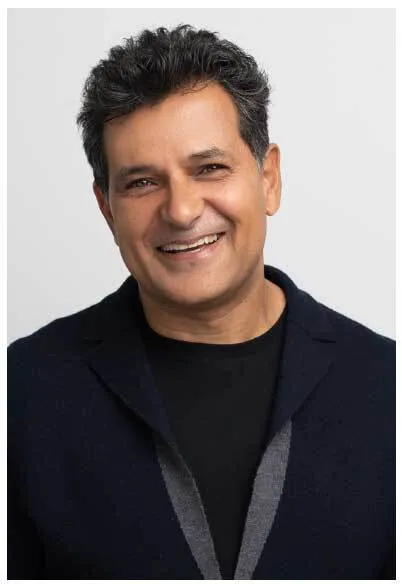
Dr Rahul Doshi is a leading UK cosmetic dentist, entrepreneur and former Clinical Director of Dentex/PortmanDentex, with 25+ years of experience in dentistry and practice growth. As co-founder of Dental Wealth Builder, he helps dentists, practice owners and dental groups build profitable, scalable and high-performing businesses...Know more
Turn This Into a Plan for Your Practice
Reading is a start. The DWB Growth System turns it into a structured, step-by-step plan built around your practice, so you know exactly what to focus on first and why. No generic playbook, no pressure to sign up, just a clear path built for where you are right now.
About the Author

Dr Rahul Doshi
Dr Rahul Doshi, BDS (Lond.), LDSRCS (Eng.), is one of the UK’s most influential figures in cosmetic, comprehensive and business-led dentistry.
Widely recognised as one of the key dentists who helped introduce cosmetic dentistry to the UK over 25 years ago, Rahul is the founder of The Perfect Smile Studios and the Advanced Training Institute, where he trained dentists in Interdisciplinary Comprehensive Dentistry, including smile design, occlusion, treatment planning, full-mouth rehabilitation and advanced restorative care.
His experience extends far beyond clinical dentistry. Rahul has owned, led and scaled multiple award-winning dental practices, giving him first-hand insight into what it takes to build profitable, high-performing and team-led dental businesses. This practical experience now underpins his work with dental practice owners, multi-practice owners and dental groups who want to improve profitability, strengthen systems and scale with greater confidence.
Rahul has held several major leadership positions within the profession. As Clinical Director for Dentex Healthcare and later PortmanDentex, he helped support the growth and scaling of the group from inception to 185 practices, contributing strategic clinical leadership across one of the UK’s major dental organisations. He was also Clinical Director of the monthly dental publication Premium Practice Dentistry and a founding board member of the British Association of Private Dentistry.
A Past President of the British Academy of Cosmetic Dentistry, Rahul has been a long-standing judge for the Private Dentistry Awards and Dental Industry Awards. He has also been voted one of the UK’s Top 50 most influential dentists and recognised by his peers for his outstanding contribution to cosmetic dentistry.
As an inspirational national and international speaker, Rahul has lectured on cosmetic dentistry, smile makeovers, treatment planning, laser dentistry, leadership and practice growth across the UK, United States, UAE, Italy, India, Germany, Sweden and South Africa.
His work and expertise have been featured widely in national and international media, including the BBC, ITV, The Times, Daily Mail, The Guardian, Evening Standard, Marie Claire, Tatler and leading dental publications.
As co-founder of Dental Wealth Builder, Rahul now uses his rare combination of clinical excellence, entrepreneurial experience, multi-practice scaling and large-scale group leadership to help dentists, practice owners and dental groups build more profitable, scalable and rewarding businesses.