How to Hire the Right People: A Values-Based Framework

>£225 million
additional profit created across DWB client practices
30 years
experience as owners of group practices
200+
dental practices coached worldwide
A CV looks perfect on paper. Good qualifications, relevant experience, confident in the interview. Six months later, the fit still is not right, and nobody can quite explain why.
This happens more often than most practice owners expect. Technical competence is the easiest thing to assess in an interview. It also turns out to be the least reliable predictor of whether someone actually thrives in the practice once they join.
At Dental Wealth Builder, we coach practice owners to hire for values first, then train for skill. This guide sets out what that actually means in practice. It also covers how to build it into an ordinary hiring process, without turning recruitment into a lengthy ordeal.
None of this means ignoring qualifications or clinical competence, which obviously still matter a great deal. It means treating values fit as a genuine filter alongside them. Not an afterthought squeezed into the last five minutes of an interview, once every technical question has already been asked.
Why skills alone are not a reliable filter
Skills are visible on a CV and testable in an interview. That makes them an appealing shortcut, because they feel objective and easy to compare between candidates.
The problem is that skills gaps close relatively quickly with the right training and support. A values mismatch tends to do the opposite. It widens over time, as the daily friction of working against someone's real priorities slowly wears down both sides.
Dental practice recruitment in the UK often optimises for the wrong variable as a result. A technically strong hire who does not fit how the practice actually operates day to day becomes a source of ongoing friction. That is true whatever their qualifications happen to say on paper.
That friction rarely shows up in week one. It tends to appear gradually, in small moments: a slightly different standard applied at reception, a shortcut taken under pressure that the rest of the team would never have taken themselves. By the time it is obvious to everyone, it has usually been quietly costing the practice for months.
What "values fit" actually means in an interview
Values fit is not a vague feeling about whether you liked someone. It means checking whether a candidate's instincts line up with how the practice actually wants to treat patients and each other, under ordinary daily pressure.
A candidate who asks thoughtful questions about the patient journey during an interview is telling you something a CV cannot. So is a candidate who asks nothing at all. The same goes for one who talks entirely about their own achievements, with no real curiosity about the team they might be joining.
Ask about a real situation rather than a hypothetical one. What did you do the last time a patient was upset, or a colleague made a mistake that affected your own work? The answer reveals far more than a rehearsed answer to "tell me about your strengths."
Listen for how someone talks about a previous employer or colleague, too. Everyone has had a difficult workplace at some point, and that is not itself a red flag. What matters is whether they can describe it with some fairness, or whether every previous situation was entirely someone else's fault.
What this looked like inside a real practice
a DWB coaching client spent thirteen years in a referral-based practice before opening his own boutique implant practice with his wife. There was no built-in patient pipeline this time. In his own words, they found themselves at a loss when it came to the business side of things.
Part of the fix was systematic marketing, learning to vet agencies properly rather than accepting the first pitch. Part of it was building the right team around that new structure, including a Treatment Coordinator who could hold the patient journey together consistently. His story is here.
Five years on, the practice has placed over 2,700 implants with continuous year-on-year growth, and case acceptance sits above 95%. None of that came from marketing alone. It came from building a team that could actually deliver on what the marketing promised.
The parallel is worth drawing out directly. Vetting a marketing agency properly, rather than accepting the first confident pitch, is the same discipline as vetting a candidate properly, rather than accepting the first confident interview. Both require looking past the polish to what actually happens once the relationship is under real pressure.
Building values fit into an ordinary process
Write down three or four values the practice genuinely operates by, in plain language rather than corporate wording nobody would actually say out loud. Vague values like excellence or integrity mean very little without a concrete example attached to each one.
Ask every candidate the same two or three values-based questions, so answers can be compared fairly across candidates rather than judged on gut feeling alone. Consistency here matters as much as the questions themselves.
Score the answers against something concrete, even informally. A quick note on whether the answer showed genuine ownership, blame-shifting, or something in between is more useful six months later than a vague memory of how the interview felt on the day.
Involve at least one team member who is not the owner in every interview. A candidate often behaves slightly differently around a future colleague than around the person doing the hiring. That difference is worth seeing before an offer ever goes out.
Keep the process short enough to actually run consistently. A framework nobody has time to follow under pressure gets skipped the first time recruitment feels urgent, which is precisely the moment values fit tends to matter most.
A short trial shift or working interview adds real signal beyond the conversation itself. Watching how someone treats a nervous patient, or responds when reception is under pressure, reveals more than an hour of interview questions ever could.
Onboarding is part of the hiring decision
A new team member's first few weeks set the pattern for how they will behave for years afterwards. Someone shown clearly what excellent looks like tends to reach full competence faster than someone left to work it out alone.
A structured first ninety days works better than an unstructured first year. Pair the new hire with an existing team member who already embodies the practice's values in daily behaviour, not just in theory.
Check in properly at two weeks, not only on day one and then again at a formal three-month review. Small, early corrections land far more gently than a larger one saved up and delivered months later.
Use the same values language during onboarding that was used in the interview. If a candidate was asked how they would handle an upset patient, revisit that same scenario in their first month, with a real example from their own early days on the job. Consistency here reinforces that the values were not just interview theatre.
When the fit turns out to be wrong anyway
Even a careful process sometimes gets it wrong, and that is worth planning for rather than being surprised by. A genuine values mismatch, spotted honestly and early, is far easier to address than one left to fester for a year out of politeness.
An honest, early conversation about the mismatch is fairer to everyone than a slow drift toward resentment on both sides. It also protects the rest of the team from absorbing the friction a poor fit tends to create around them.
This is not the same as giving up quickly on someone who is simply still learning. A genuine values mismatch looks different from a skills gap. A new team member who is nervous, or making honest early mistakes while still finding their feet, deserves patience and proper support, not a premature verdict about fit.
Delay rarely makes a genuine mismatch easier to resolve. The longer it continues, the more it shapes how the rest of the team behaves, and the harder the eventual conversation becomes for everyone involved.
Where to start this week
Write down the three or four values your practice genuinely operates by, and turn each one into a real interview question grounded in an actual situation.
Use the same questions with the next candidate you interview, and involve a team member who is not the owner in the process. Notice what the answers reveal that a CV never could.
Hiring for values first, then training for skill, is not a slower process than hiring for skills alone. It is simply a more accurate one, and the accuracy shows up months later in who actually stays.
The practices that get this right are rarely the ones with the most sophisticated interview process. They are the ones who ask better questions consistently, and who trust what the answers actually reveal, rather than talking themselves out of a concern because the CV looked impressive.
If you want structured support building this into your own hiring process, book a practice coaching call with DWB. We will help you build a process that actually works.


Categories

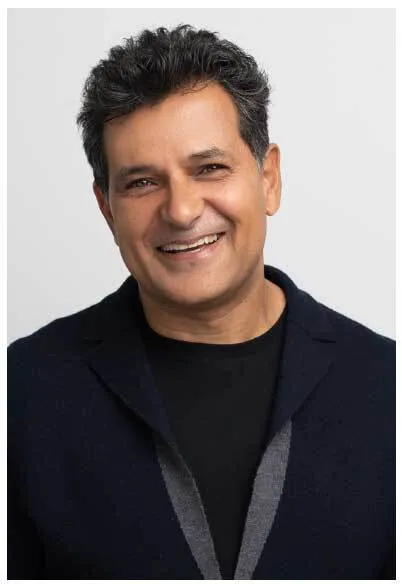
Dr Rahul Doshi is a leading UK cosmetic dentist, entrepreneur and former Clinical Director of Dentex/PortmanDentex, with 25+ years of experience in dentistry and practice growth. As co-founder of Dental Wealth Builder, he helps dentists, practice owners and dental groups build profitable, scalable and high-performing businesses...Know more
Turn This Into a Plan for Your Practice
Reading is a start. The DWB Growth System turns it into a structured, step-by-step plan built around your practice, so you know exactly what to focus on first and why. No generic playbook, no pressure to sign up, just a clear path built for where you are right now.
About the Author

Dr Rahul Doshi
Dr Rahul Doshi, BDS (Lond.), LDSRCS (Eng.), is one of the UK’s most influential figures in cosmetic, comprehensive and business-led dentistry.
Widely recognised as one of the key dentists who helped introduce cosmetic dentistry to the UK over 25 years ago, Rahul is the founder of The Perfect Smile Studios and the Advanced Training Institute, where he trained dentists in Interdisciplinary Comprehensive Dentistry, including smile design, occlusion, treatment planning, full-mouth rehabilitation and advanced restorative care.
His experience extends far beyond clinical dentistry. Rahul has owned, led and scaled multiple award-winning dental practices, giving him first-hand insight into what it takes to build profitable, high-performing and team-led dental businesses. This practical experience now underpins his work with dental practice owners, multi-practice owners and dental groups who want to improve profitability, strengthen systems and scale with greater confidence.
Rahul has held several major leadership positions within the profession. As Clinical Director for Dentex Healthcare and later PortmanDentex, he helped support the growth and scaling of the group from inception to 185 practices, contributing strategic clinical leadership across one of the UK’s major dental organisations. He was also Clinical Director of the monthly dental publication Premium Practice Dentistry and a founding board member of the British Association of Private Dentistry.
A Past President of the British Academy of Cosmetic Dentistry, Rahul has been a long-standing judge for the Private Dentistry Awards and Dental Industry Awards. He has also been voted one of the UK’s Top 50 most influential dentists and recognised by his peers for his outstanding contribution to cosmetic dentistry.
As an inspirational national and international speaker, Rahul has lectured on cosmetic dentistry, smile makeovers, treatment planning, laser dentistry, leadership and practice growth across the UK, United States, UAE, Italy, India, Germany, Sweden and South Africa.
His work and expertise have been featured widely in national and international media, including the BBC, ITV, The Times, Daily Mail, The Guardian, Evening Standard, Marie Claire, Tatler and leading dental publications.
As co-founder of Dental Wealth Builder, Rahul now uses his rare combination of clinical excellence, entrepreneurial experience, multi-practice scaling and large-scale group leadership to help dentists, practice owners and dental groups build more profitable, scalable and rewarding businesses.