Leadership Skills for Dentists: How to Lead Your Team Without Losing Clinical Focus

>£225 million
additional profit created across DWB client practices
30 years
experience as owners of group practices
200+
dental practices coached worldwide
You qualified to do dentistry, not to run a business. Somewhere between your first associate job and owning the practice, you became responsible for a team. Nobody handed you a manual for that part.
You still want your hands in the mouth, your eyes on the margins, your mind on the case in front of you. But the diary needs covering. The new nurse needs training. Two of your team haven't spoken properly since last Tuesday.
Leadership skills for dentists rarely arrive with the qualification. They get built, usually under pressure, while the clinical work still has to happen. Most owners we meet did not choose to become the person everyone interrupts. It happened gradually, one urgent question at a time, until it became the practice's normal way of working.
At Dental Wealth Builder, we have coached practice owners through this exact tension for thirty years, and we have run our own practices through it too. The good news is that leading a team well does not mean spending less time on dentistry. It means changing a small number of things about how you communicate, so the practice runs on more than your personal energy alone.
Why the tension feels so constant
Clinical work rewards you for doing it yourself. You see the treatment. You control the outcome. You get immediate feedback on whether it worked.
Leadership rewards you for something closer to the opposite. It asks you to step back and ask a question instead of giving an instruction. It means letting someone else own a result you could probably deliver faster alone.
Those are two different skill sets, and dental training builds one of them. Leadership is rarely part of the syllabus.
The result is a practice where the owner is the best clinician and the default manager, both at once. Every decision routes back through you, not because your team is incapable of more, but because that is the pattern they have learned. The fix is not working harder at both jobs. It is separating them properly, so leadership becomes a set of repeatable habits rather than something squeezed in between patients.
The gap between managing a team and leading one
In our experience at DWB, most practices default to managing their team rather than leading it. Managing is simply the more instinctive response under pressure.
There is a real difference between the two, and it shows up in the daily texture of the practice. Management reacts to problems as they land. It focuses attention on mistakes. It runs on command and on transactional relationships.
Leadership works differently. It comes from vision and influence rather than instruction. It coaches people ahead of problems instead of only reacting once they've happened. It builds a culture where people are accountable because they want to be, not because they are being watched.
Shifting from one to the other is, in our experience at DWB, the single most impactful change a practice owner can make. It does not require a personality transplant. It requires noticing which mode you default to under pressure, and choosing the other one on purpose, more often than feels natural at first.
Leadership starts with you, not with the team
Before you can lead anyone else, you have to be someone worth following on an ordinary Tuesday, not just on the good days. Four things sit underneath that: credibility, consistency, self-management and self-awareness.
Your team will not rise above the standard of leadership they see from you every day. If you want a calmer, more accountable practice, that standard has to start at your own desk, not the team's.
Credibility comes from doing what you say you will do. Consistency means the team gets the same version of you on a stressful Friday as they get on a quiet Monday. Self-management is your ability to notice you are irritated, and choose your words anyway rather than letting the irritation choose them for you. Self-awareness is simply knowing which of the two modes above, managing or leading, you are actually in right now.
The conversations that build trust, one at a time
Culture in a dental practice is not set by a mission statement on the wall. It is set conversation by conversation. Every one of them either deposits into trust or withdraws from it.
The words you reach for under pressure matter more than the values you would choose if you had time to think. Take the moment a team member makes a mistake. The instinctive question, "why did you let this happen?", puts them straight into defence.
Asking instead, "what can we learn from this?", moves the same conversation from blame to problem-solving. It doesn't lower the standard you expect. The same shift works when you disagree with an idea. "I see it differently, can I share why?" keeps the door open in a way that "that won't work" never does.
None of this is about being soft. It is about choosing the version of the sentence that actually gets you the outcome you want: a team that brings you problems early, rather than hiding them until Friday afternoon.
What this looked like inside a real practice
two DWB coaching clients came to DWB with scattered marketing and no cohesive strategy. There was also a pattern of micromanagement that neither of them had set out to create, but had drifted into over time.
Rather than starting with marketing tactics, the coaching began with leadership. It focused on helping them understand how to give their team real ownership, rather than directing it task by task.
another DWB coaching client's own patient communication changed as a result. In her words, it became personalised rather than scripted. The couple also introduced structured goal-setting, for themselves and for the team together.
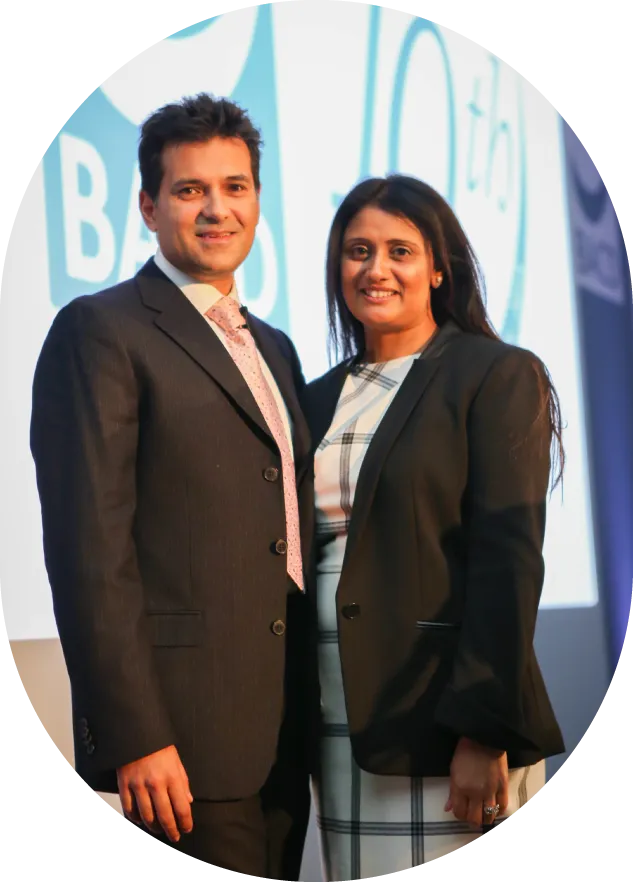
Raj has described leadership as "such a core part of the programme." More than a year in, the practice reports progress every week, rather than in occasional bursts. Nothing about that case involved either of them doing less dentistry. It involved doing less of the constant redirecting that comes from a team that has never been given room to take ownership. You can read the full case study here.
Why the leader's behaviour matters more than any single policy
DWB's own leadership training materials, drawn from work with dental teams across the UK, point to the same conclusion again and again. Team engagement tracks the immediate leader's behaviour far more closely than it tracks pay, perks or process. Our leadership programme material describes roughly seven in ten of a team's engagement as directly attributable to how their immediate leader behaves, day to day, not to the practice's policies on paper.
The same material links emotionally intelligent management to significantly stronger retention: teams led this way are far more likely to stay than teams that aren't. That matters more than it sounds. Every leaver costs you recruitment time, training time and a stretch of reduced capacity while the new person finds their feet. Practices led with visible emotional intelligence tend to keep people longer, because a team member who feels genuinely heard has less reason to look elsewhere.
That doesn't mean pay and process don't matter. It means they sit on top of a foundation, and the foundation is how you behave in the room, not what's written in the staff handbook.
Losing clinical focus isn't the risk you think it is
The fear we hear most often from the owners we coach is that leadership work will eat into chair time. a DWB coaching client came to DWB with an established practice that had plateaued. He was worried that standing still meant, in his own words, "effectively going backwards." He wanted his personal time back, and a structured plan for eventually stepping away.
The shift he made was not away from dentistry. It was towards more business-focused decision-making alongside it. His team engaged with the changes faster than he expected, something he credits partly to working with coaches who have run their own practices and understood the pressure from the inside. His story is here.
In DWB's own coaching work, that pattern repeats. Leadership work protects clinical time rather than competing with it, because a team that can solve its own smaller problems leaves you with more uninterrupted hours in the surgery, not fewer.
Three habits that protect your clinical time
You do not need to overhaul the practice to start leading differently. Three habits, done consistently, do most of the work.
First, say the vision out loud, more often than feels necessary. Mention where the practice is going in team meetings, in one-to-ones, even in the middle of a difficult conversation. A team without a clear direction tends to default to completing tasks rather than pursuing excellence. Nobody has told them what excellence would actually look like here.
Second, default to coaching over instructing wherever the situation allows it. Asking "what do you think we should do about this?" takes longer in the moment than telling someone the answer. But it builds a team member who can solve the next version of the same problem without you standing over them.
Third, protect a fixed slot each week for leadership itself. A team meeting, or a round of one-to-ones, that does not move when the diary gets busy. The leadership work that gets skipped every time something clinical comes up is, in practice, the leadership work that never gets done at all.
You don't need to be a natural people-person
Some of the practice owners we work with worry that leadership training for dentists is really asking them to become a different kind of person, more outgoing, more comfortable holding the room. It isn't. Credibility, consistency, self-management and self-awareness are habits, not personality traits. A quiet, precise clinician can build all four just as reliably as someone naturally talkative.
What actually changes is the pattern you default to when something goes wrong. Instead of solving it yourself and moving on, you pause long enough to ask a question and let the team member think it through with you. That single pause, repeated often enough, is most of what separates a led practice from a managed one.
Where to start this month
Pick one conversation you have been avoiding, with one team member, and have it using a question instead of a verdict. Notice, honestly, whether your default under pressure this week was to manage or to lead.
That single piece of self-awareness is where most of the practice owners we have supported through dentist leadership training actually began, long before any wider system followed. Leading a dental team well is not a separate career from being a good dentist. It is the discipline that lets you keep being one, on your own terms, without the practice depending entirely on your energy to keep running.
If you want structured support building these habits into your practice, book a practice coaching call with DWB and we will help you work out where to start.


Categories

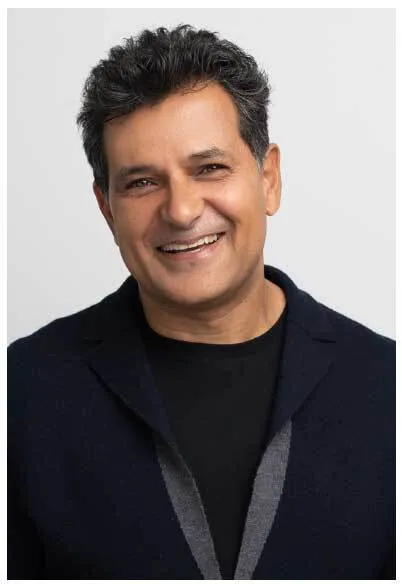
Dr Rahul Doshi is a leading UK cosmetic dentist, entrepreneur and former Clinical Director of Dentex/PortmanDentex, with 25+ years of experience in dentistry and practice growth. As co-founder of Dental Wealth Builder, he helps dentists, practice owners and dental groups build profitable, scalable and high-performing businesses...Know more
Turn This Into a Plan for Your Practice
Reading is a start. The DWB Growth System turns it into a structured, step-by-step plan built around your practice, so you know exactly what to focus on first and why. No generic playbook, no pressure to sign up, just a clear path built for where you are right now.
About the Author
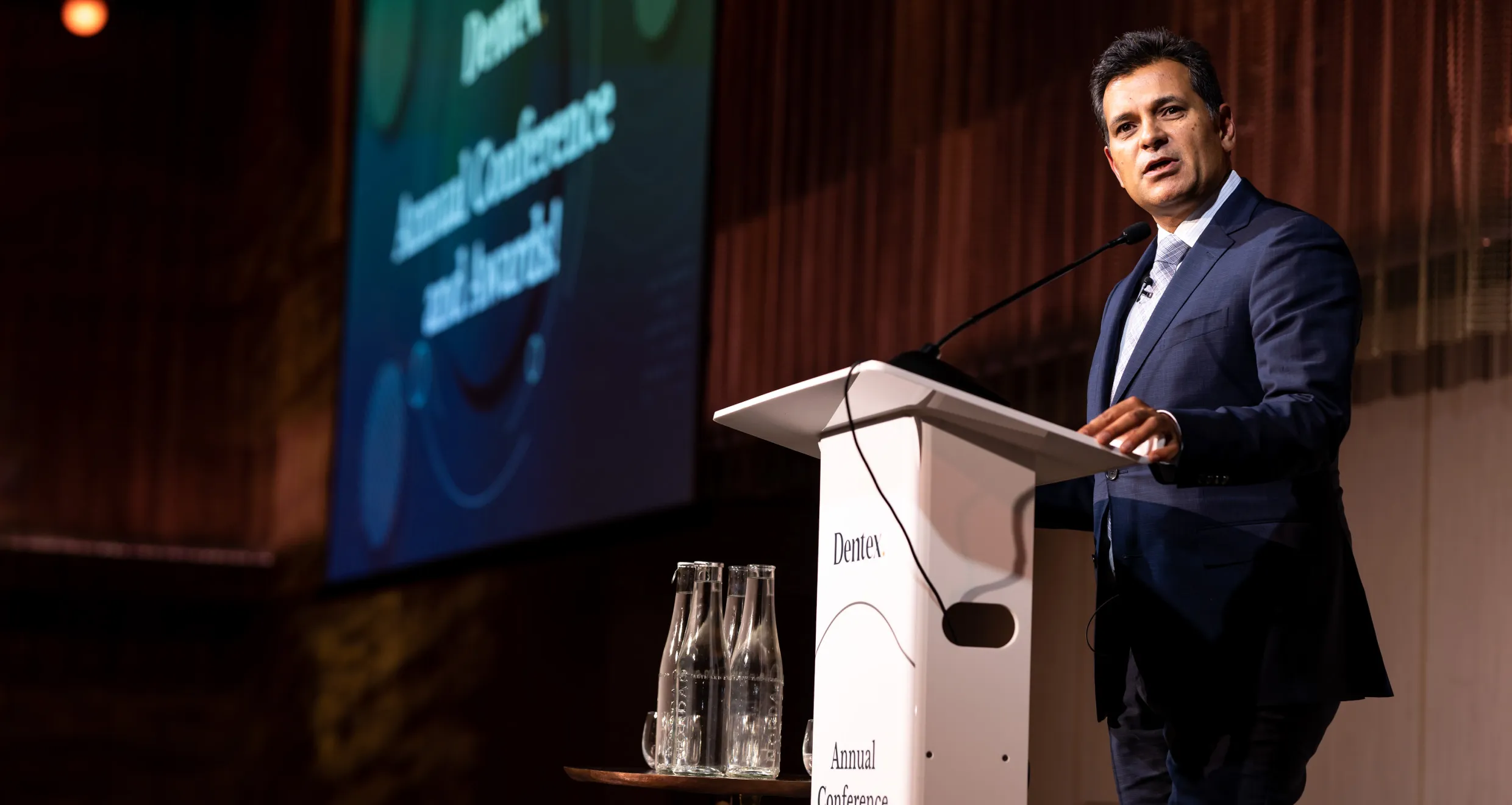
Dr Rahul Doshi
Dr Rahul Doshi, BDS (Lond.), LDSRCS (Eng.), is one of the UK’s most influential figures in cosmetic, comprehensive and business-led dentistry.
Widely recognised as one of the key dentists who helped introduce cosmetic dentistry to the UK over 25 years ago, Rahul is the founder of The Perfect Smile Studios and the Advanced Training Institute, where he trained dentists in Interdisciplinary Comprehensive Dentistry, including smile design, occlusion, treatment planning, full-mouth rehabilitation and advanced restorative care.
His experience extends far beyond clinical dentistry. Rahul has owned, led and scaled multiple award-winning dental practices, giving him first-hand insight into what it takes to build profitable, high-performing and team-led dental businesses. This practical experience now underpins his work with dental practice owners, multi-practice owners and dental groups who want to improve profitability, strengthen systems and scale with greater confidence.
Rahul has held several major leadership positions within the profession. As Clinical Director for Dentex Healthcare and later PortmanDentex, he helped support the growth and scaling of the group from inception to 185 practices, contributing strategic clinical leadership across one of the UK’s major dental organisations. He was also Clinical Director of the monthly dental publication Premium Practice Dentistry and a founding board member of the British Association of Private Dentistry.
A Past President of the British Academy of Cosmetic Dentistry, Rahul has been a long-standing judge for the Private Dentistry Awards and Dental Industry Awards. He has also been voted one of the UK’s Top 50 most influential dentists and recognised by his peers for his outstanding contribution to cosmetic dentistry.
As an inspirational national and international speaker, Rahul has lectured on cosmetic dentistry, smile makeovers, treatment planning, laser dentistry, leadership and practice growth across the UK, United States, UAE, Italy, India, Germany, Sweden and South Africa.
His work and expertise have been featured widely in national and international media, including the BBC, ITV, The Times, Daily Mail, The Guardian, Evening Standard, Marie Claire, Tatler and leading dental publications.
As co-founder of Dental Wealth Builder, Rahul now uses his rare combination of clinical excellence, entrepreneurial experience, multi-practice scaling and large-scale group leadership to help dentists, practice owners and dental groups build more profitable, scalable and rewarding businesses.