NHS to Private Dental Practice: The Step-by-Step Conversion Guide
>£225 million
additional profit created across DWB client practices
30 years
experience as owners of group practices
200+
dental practices coached worldwide
Moving from NHS to private dentistry is a major change for a practice and its patients. It can create more flexibility around appointment structure, service design and private treatment choices, but it also brings commercial, contractual and communication decisions that need careful planning.
The starting point should not be that private dentistry is automatically 'better'. NHS dentistry must provide clinically necessary care to achieve and maintain oral health. The real question is how clearly your practice can explain the additional choices and service model it intends to offer privately.
Payment and membership plans can be useful tools in an NHS-to-private conversion, but they are only one part of the transition. Treating conversion purely as a pricing exercise overlooks the bigger questions of positioning, patient communication, capacity, team readiness and the experience patients will receive.
For patients, trust and understanding matter alongside affordability. They need clear, accurate information about what will remain available under the NHS, what is being offered privately, what each option costs and what the relevant benefits and limitations are.
Why "just add a payment plan" gets this backwards
A finance or membership plan may make costs easier to manage for some patients, but it does not replace a clear explanation of the care being offered. Patients need to understand the options before deciding whether a private arrangement is right for them.
In practice, affordability is only one possible barrier to acceptance. Confusion about the offer, inconsistent communication and uncertainty about value can matter too.
The practices that convert successfully treat this as a bigger decision than pricing. It touches what the practice stands for, how the team talks to patients, and what the equipment and appointment structure can deliver. It also depends on how consistently all of that gets communicated. Finance sits at the end of that chain, not at the start of it.
Start with a clear picture of the practice you're building
Before a single conversation with a patient changes, you need your own answer to a more basic question. What is this practice going to be known for once it's private? Not "better dentistry" in general terms, because every practice claims that.
Which treatments will define you? Which patients do you most want to serve? How much of the work will you deliver yourself, and how much will sit with your associates?
This is the same starting point DWB uses with dentists moving into ownership or repositioning an existing practice. A private offer without a clear identity behind it tends to compete on price rather than value. If you can't finish the sentence "our practice is the natural choice for patients who want [X] because we provide [Y]," your patients can't finish it for you either. That sentence is what your whole conversion rests on.
Explain the private offer without diminishing NHS care
A private offer should be explained in specific, factual terms rather than described simply as "better". Depending on the practice, differences may include appointment structure, service choices, materials, technology, elective treatments or other aspects of the patient experience. Only describe differences your practice can genuinely deliver.
Depending on your practice and the patient's clinical needs, areas you may need to explain include:
● How appointment length and scheduling may differ under your private service model
● Any additional clinically appropriate materials or techniques you offer privately, with their benefits, limitations and costs explained
● Any technology or treatment-planning services available within your private offer
● Private or elective treatment options that are not clinically necessary NHS care, where appropriate for the individual patient
● A clear treatment plan showing which elements are NHS and which are private, together with the relevant costs
None of this needs exaggeration. It needs to be said plainly, with the specific equipment, material or approach named, rather than left as a vague promise of quality.
Private options may include elective or specialist services beyond clinically necessary NHS care. However, clinicians must not imply that clinically necessary treatment is unavailable on the NHS when it should be available. Each patient's options should be explained according to their individual clinical circumstances.
For example, a suitable patient who has worn dentures for years may wish to understand whether implant treatment is an appropriate private option. The purpose of that conversation is informed choice, not persuasion.
The conversation that converts patients
Once a patient can picture what's different, the conversation itself has to do the rest of the work. This is where DWB's coaching experience is built on converting NHS patients to private care as a specific, repeatable skill, not a hopeful pitch.
We train teams to use the same five-step structure for every treatment conversation:
- Understand what the patient actually wants first.
- Align on that goal, in their own words.
- Explain the options simply.
- Present the value in terms of their real-life outcome.
- Check where they've landed, before any figures come up.
Questions about fees will arise, so teams need to respond without pressure. Acknowledge the concern, clarify what the patient wants to understand, revisit the relevant options and costs, and give them reasonable time to decide. The GDC requires patients to receive clear information about relevant treatment options and possible costs, and to have sufficient information and time to make an informed decision.
One DWB coaching client built a boutique implant practice from nothing, with no inherited patient pipeline to convert. Systematic, ongoing marketing paired with a properly built patient journey, including a Treatment Coordinator role and consistent communication, took the practice past 2,700 implants placed in five years. Case acceptance has stayed above 95%. This is one example from a past DWB coaching client.
That result does not predict what another practice will achieve. It does illustrate how a structured patient journey, consistent communication and a Treatment Coordinator role can support case acceptance alongside effective marketing.
A well-integrated Treatment Coordinator isn't there to sell dentistry. Their job is to give a patient time, answer the questions they didn't think to ask the dentist, and guide a decision that's often both clinically and financially significant.
Build the conversion into how the practice runs, not one campaign
A single letter announcing the change rarely shifts much on its own. What moves patients is a consistent experience across every enquiry and appointment for months afterwards.
Decide in advance who owns the first conversation about going private. Decide how the examination and consultation will demonstrate the difference, rather than just describe it. Decide how a patient who says they need time to think gets followed up, rather than forgotten.
Track the numbers that tell you whether this is working. Watch consultations booked from existing NHS patients, case acceptance at consultation, and how many undecided patients convert after follow-up. Without that, you're guessing whether the conversion is gaining ground or quietly stalling.
Roleplay this conversation with your team before you need it in front of a real patient. DWB builds this into practice coaching directly, because a script read for the first time in a live consultation rarely sounds natural. Practised regularly, the same words start to sound like the team's own, not a line they've memorised.
Your existing NHS patients are the opportunity, not just new marketing
Before spending on external advertising, look at what's already in front of you. Re-engage patients who haven't been seen in a while. Explain private treatments they were never told about. Correct inconsistent messaging across your website and reception team.
That internal work may reveal opportunities before additional advertising is required. Existing patients already know the practice, but they still need balanced information and a genuine choice about whether private care suits them.
Marketing still has a role once that internal opportunity is being worked properly. A website and social presence that explains your private services, rather than just listing them, helps new patients arrive already understanding what you offer. But that only works once the patient journey behind it can handle the response with confidence.
Where finance genuinely fits
Once patients understand their treatment options and the associated costs, a payment or membership plan may remove a practical affordability barrier for some. Present finance as one available way to pay, not as a substitute for informed consent or as pressure to proceed.
Bringing it together
Converting from NHS to private starts with a decision about the practice you're building, not a pricing exercise solved with a leaflet. That decision becomes visible to patients through what they see and experience at every stage, from the equipment in the surgery to the words your team uses in a consultation. Get the vision, communication and patient journey right, and the finance conversation can sit in its proper place as one part of a well-informed patient decision.
If you're weighing up this shift for your own practice, a Practice Growth Strategy call can help you look at where the real opportunity sits, and what to prioritise first. Book a Practice Coaching call with DWB.
Frequently asked questions
Will I lose patients if I stop offering NHS treatment?
Some patients will leave, and that's worth planning for honestly rather than ignoring. Some patients may choose to stay privately and others may prefer to seek NHS care elsewhere. The practice should plan for both outcomes and communicate the change clearly and respectfully.
Do I need to convert the whole practice at once?
No. In our experience, many practices move gradually, offering private options alongside NHS contract work before deciding whether, or how far, to convert further. The vision and communication work matters at any scale.
What's the single biggest reason conversion attempts stall?
In our experience at DWB, it's usually inconsistent communication. One team member explains the private option well, another doesn't mention it at all, and patients pick up on that uncertainty quickly.
Should I lead with a finance or membership plan?
Explain the treatment options, relevant benefits and limitations, and costs clearly first. Finance or membership can then be presented as an optional way to pay where appropriate.
Does the whole team need to be involved, or just the dentists?
The whole team. Reception handles the first enquiry, and nurses reinforce what's been discussed once the patient is in the chair. A Treatment Coordinator often carries the follow-up. A conversion strategy that only trains dentists leaves most of the patient's journey unmanaged.
How long does a conversion like this typically take?
It depends on the practice, the team and how much of the patient base is being addressed at once. DWB works with each practice to assess where it stands before recommending the right pace and support.
Sources: An anonymised DWB coaching case study; DWB Case Acceptance Communication Scripts; Why DWB Coaching (2025).


Categories

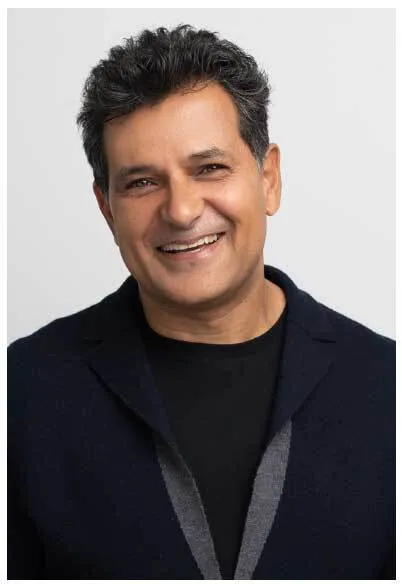
Dr Rahul Doshi is a leading UK cosmetic dentist, entrepreneur and former Clinical Director of Dentex/PortmanDentex, with 25+ years of experience in dentistry and practice growth. As co-founder of Dental Wealth Builder, he helps dentists, practice owners and dental groups build profitable, scalable and high-performing businesses...Know more
Turn This Into a Plan for Your Practice
Reading is a start. The DWB Growth System turns it into a structured, step-by-step plan built around your practice, so you know exactly what to focus on first and why. No generic playbook, no pressure to sign up, just a clear path built for where you are right now.
About the Author
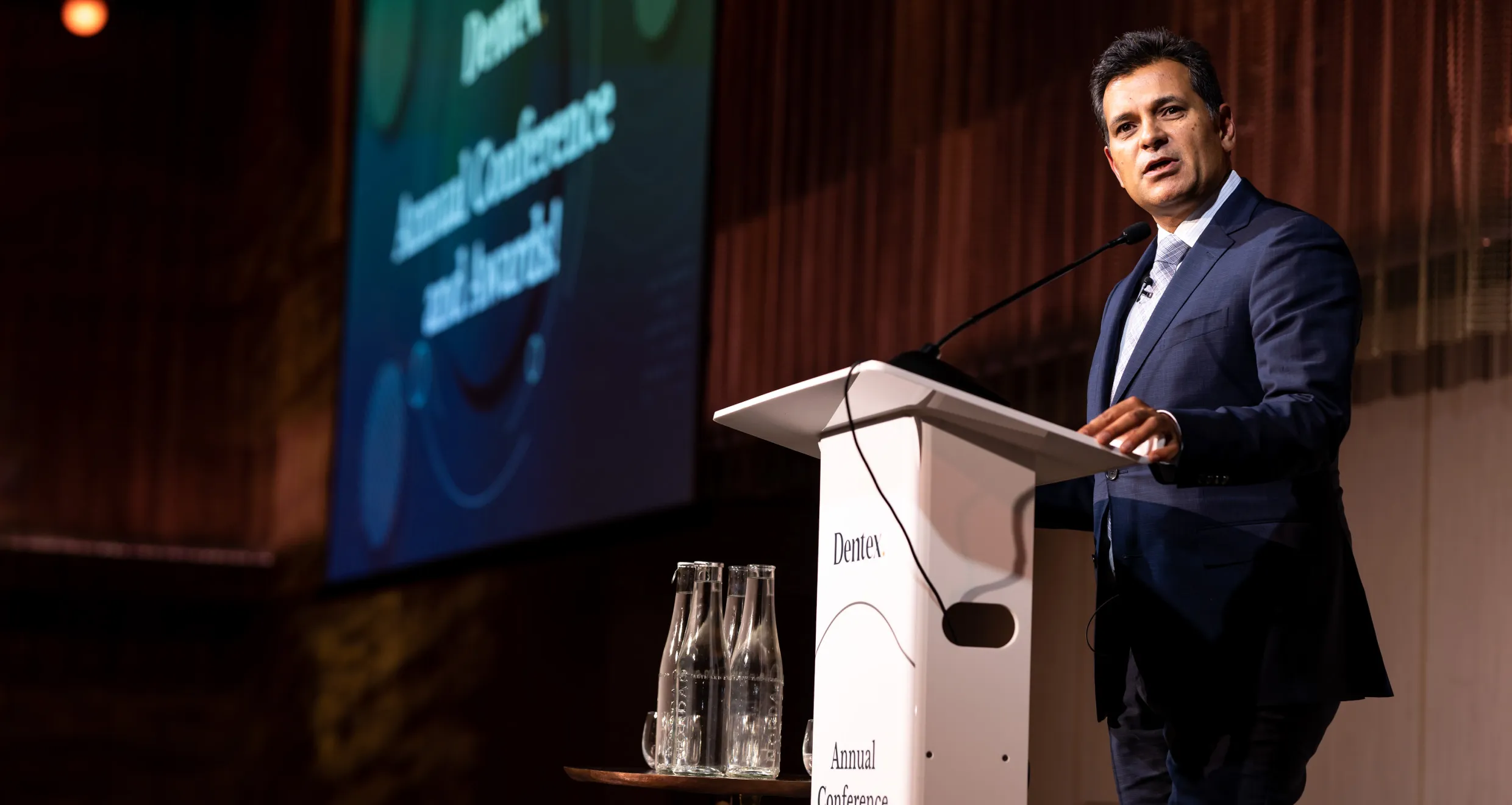
Dr Rahul Doshi
Dr Rahul Doshi, BDS (Lond.), LDSRCS (Eng.), is one of the UK’s most influential figures in cosmetic, comprehensive and business-led dentistry.
Widely recognised as one of the key dentists who helped introduce cosmetic dentistry to the UK over 25 years ago, Rahul is the founder of The Perfect Smile Studios and the Advanced Training Institute, where he trained dentists in Interdisciplinary Comprehensive Dentistry, including smile design, occlusion, treatment planning, full-mouth rehabilitation and advanced restorative care.
His experience extends far beyond clinical dentistry. Rahul has owned, led and scaled multiple award-winning dental practices, giving him first-hand insight into what it takes to build profitable, high-performing and team-led dental businesses. This practical experience now underpins his work with dental practice owners, multi-practice owners and dental groups who want to improve profitability, strengthen systems and scale with greater confidence.
Rahul has held several major leadership positions within the profession. As Clinical Director for Dentex Healthcare and later PortmanDentex, he helped support the growth and scaling of the group from inception to 185 practices, contributing strategic clinical leadership across one of the UK’s major dental organisations. He was also Clinical Director of the monthly dental publication Premium Practice Dentistry and a founding board member of the British Association of Private Dentistry.
A Past President of the British Academy of Cosmetic Dentistry, Rahul has been a long-standing judge for the Private Dentistry Awards and Dental Industry Awards. He has also been voted one of the UK’s Top 50 most influential dentists and recognised by his peers for his outstanding contribution to cosmetic dentistry.
As an inspirational national and international speaker, Rahul has lectured on cosmetic dentistry, smile makeovers, treatment planning, laser dentistry, leadership and practice growth across the UK, United States, UAE, Italy, India, Germany, Sweden and South Africa.
His work and expertise have been featured widely in national and international media, including the BBC, ITV, The Times, Daily Mail, The Guardian, Evening Standard, Marie Claire, Tatler and leading dental publications.
As co-founder of Dental Wealth Builder, Rahul now uses his rare combination of clinical excellence, entrepreneurial experience, multi-practice scaling and large-scale group leadership to help dentists, practice owners and dental groups build more profitable, scalable and rewarding businesses.