Selling Your Dental Practice to a Corporate or DSO: What You Need to Know

>£225 million
additional profit created across DWB client practices
30 years
experience as owners of group practices
200+
dental practices coached worldwide
An email, or a phone call. That's usually how it starts. A corporate group, sometimes called a DSO if you're following the US terminology, has been building a list of practices in your area.
Yours is on it. They want to talk about buying.
Maybe you weren't planning to sell this year. Maybe you were, and you're just not sure whether a corporate buyer is the right one for you. Either way, the conversation that follows will move faster than you expect. It will also be conducted on the buyer's terms, unless you understand how they actually value a practice before you sit down.
Selling to a corporate or DSO isn't a bigger version of selling to another dentist. The buyer is different. The process is different.
And the practice that gets the best outcome is rarely the one with the flashiest surgery. It's the one that was built, deliberately, to survive the owner stepping back.
What a corporate buyer is actually looking for
A corporate or group buyer isn't purchasing your chair-side skill. They're purchasing a cash flow that keeps working after you've handed over the keys. That single difference explains almost everything else about how they assess a practice.
We've seen this from both sides of the table. Rahul spent five years as Clinical Strategy Development Director for Dentex, helping grow the group. We've also both judged the National Private Dentistry Awards for close to two decades.
Repeatedly, the practices that attracted serious offers weren't the ones with the best dentistry on the day. They were the ones where the systems, the team and the numbers could stand on their own, without the seller standing behind them.
A corporate buyer wants consistent clinical quality across the whole team, not concentrated in one person. They want a patient journey that runs the same way whoever happens to be in the room. And they want financial reporting clean enough that their due diligence team doesn't have to guess at what's really going on. And they want financial reporting clean enough that their due diligence team doesn't have to guess at what's really going on.
How the valuation actually works
Corporate and DSO buyers value dental practices using a multiple of normalised EBITDA. That stands for earnings before interest, tax, depreciation and amortisation. Buyers use it because it strips out financing choices and accounting decisions, leaving a clearer picture of how profitable the practice is to actually run.
Reported EBITDA on your P&L usually isn't the number a buyer will use. Most owner dentists perform substantial clinical work without treating themselves as a cost on the books. A buyer will adjust for that.
The standard approach deducts roughly 50% of your own clinical fees as a normalised operating expense. This reflects what it would genuinely cost to replace you with an associate. Without that adjustment, EBITDA looks artificially inflated, and it misleads both sides once negotiation starts.
Once normalised EBITDA is established, the typical valuation range for an established UK dental practice sits between four and seven times that figure. Stronger practices tend to command the premium end. A practice with £160,000 in normalised EBITDA, valued at a six-times multiple, would sit around £960,000. Location, patient demographics, NHS/private mix and the strength of your operational systems all move you up or down within that range.
Here's why the multiple matters more than most owners expect. Improving normalised EBITDA by £50,000 over the three years before a sale doesn't just add £150,000 in accumulated operating profit. Assuming a seven-times exit multiple, it can also add roughly £350,000 to the sale value itself.
Combined, that's a potential financial benefit in the region of £500,000. It's illustrative, not a guarantee. Real deals still need to account separately for tax, transaction costs and any buyer-specific adjustments on top.
The owner-dependency problem
The single biggest driver of a discounted offer is a practice that depends too heavily on the person selling it.
A brilliant principal with no bench strength behind them is a bigger risk to a buyer than a good, consistent team without a star performer. That's not because clinical excellence doesn't matter. It matters.
But a buyer isn't paying for what happens while you're still in the building. They're paying for what happens after you've left it.
We built our own practices, including The Perfect Smile Studios, around that principle long before we had any intention of selling. A practice sells for what it's worth without the owner working every hour available. It doesn't sell for what it's worth with the owner carrying the whole thing.
Buyers pay premium multiples for transferable value. A business that stops the day the owner walks out isn't really a business to them. It's a job with a lease attached.
What corporate due diligence actually checks
Sophisticated buyers look past a single good year. Growth engineered right before a sale tends to invite more questions, not fewer. Their advisers are trained to spot a spike that doesn't match the underlying trend.
Due diligence for a corporate or DSO sale typically covers three areas beyond the headline financials, and all three get tested harder than most owners expect going in. The first is efficient, documented systems that don't rely on memory, or on you personally, to keep running properly. The second is genuine team morale and culture.
Buyers increasingly recognise that culture affects financial performance long after completion, not just how the office feels on the day they visit. The third is clean, resolved risk around compliance, contracts and the property itself, none of which can be tidied up in the final weeks.
Engage your accountant and solicitor early. Doing so tends to prevent most of the last-minute scrambling that erodes an owner's negotiating position once a buyer is already at the table and the clock is running. Understanding what due diligence involves before that point can also help you identify gaps while there is still time to address them.
What we've seen work: Dr Ali Rifai's practice
Dr Ali Rifai's Surrey practice had, in his own words, hit a brick wall by 2018. He'd lost some of his interest and confidence in pushing the business further, to the point where he was hesitant to even use the extra practice space he'd taken on.
Working through our coaching programme, his team aligned around a shared vision using our Master Mind approach. He structured the patient journey and hired a Treatment Coordinator. His front desk was trained properly for the first time, and he introduced an end-of-month financial Snapshot tool alongside a simple reception tally sheet tracking enquiries and conversions week by week.
Turnover increased by 25 to 30% within the first year. The programme held up through the disruption of COVID, which tells you something about how much of it was genuine system rather than a good run of luck.
Just as importantly for this article, the practice became attractive to corporate buyers. Not because the dentistry changed overnight, but because the business behind it could finally stand on its own without him in every room. You can read Ali's full story here.
Is a corporate sale actually the right move?
Selling to a corporate or DSO isn't automatically the best exit. It isn't automatically the wrong one either. It's worth weighing honestly before you get pulled into a specific offer.
A corporate sale can offer certainty and a faster process than finding an individual buyer. It often lets you stay on and keep practising, without the ownership admin.
But it can also mean less day-to-day control. You're integrating into someone else's systems and culture. Many deals include earn-out structures too, where part of your payment depends on performance you no longer fully control.
Staying independent, or selling to an individual dentist instead, keeps more control in your hands. It usually means a longer, more hands-on sale process, though, and a smaller pool of buyers who can afford the price. Neither path is wrong. The mistake is choosing one without having built a practice that would command a strong offer either way.
What to do in the two to three years before you talk to a buyer
Reducing genuine owner dependency is the single biggest driver of value. It also takes longer than most owners assume. That's exactly why this work is better started years ahead, not months ahead.
Start by developing your associates so they can diagnose and present treatment confidently, not just deliver what they're told to. Build a patient journey that stays consistent across the whole team, rather than depending on whichever dentist happens to be in the room.
Document your systems, and actually use them, rather than leaving a folder of policies nobody follows. Strong operational systems make the business easier to run consistently and reduce the degree to which everyday performance depends on the principal. And start tracking your normalised EBITDA now, not the year you decide to sell. That's the only way to show a buyer's adviser the trend they're actually looking for.
Where this leaves you

If you sold your practice to a corporate buyer next year, would they be paying for a business? Or would they be paying for you? That question, more than any spreadsheet, tends to predict how the negotiation goes.
We've built and exited our own practices. We've also sat on the other side of the table, judging what actually makes a practice worth buying. The two views agree more often than owners expect. If you want an honest read on where your practice stands before a buyer tells you, we'd rather have that conversation with you now, not watch you find out during due diligence.
Talk to us about preparing your practice for a corporate or DSO sale.
Frequently asked questions on Selling Your Dental Practice to a Corporate or DSO
Is a DSO the same thing as a corporate buyer in the UK?
DSO is the US term for a dental service organisation. In the UK, the equivalent buyer is usually described simply as a corporate group or a dental group. The valuation approach and the due diligence focus are broadly similar between the two.
How long does a corporate sale usually take?
This varies by buyer, and by how prepared your practice already is, so we won't put an exact timescale on it here. What we can say from direct experience is this: practices with clean systems and consistent financial reporting move through due diligence with far fewer delays than those without.
Will I have to keep working in the practice after a corporate sale?
Often, though the structure varies by buyer and by deal. Many corporate sales include an earn-out, or a fixed period of continued clinical work. Clarify this early with your adviser, rather than assuming either way.
What's the biggest mistake owners make when preparing to sell to a corporate?
Trying to make one year's accounts look attractive, instead of building genuine, sustained performance over several years. Buyers and their advisers look past a good final year, searching for evidence of a trend. A sudden improvement right before a sale tends to invite scrutiny, not avoid it.


Categories

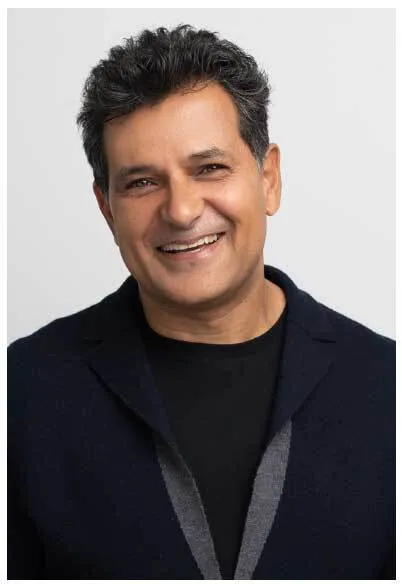
Dr Rahul Doshi is a leading UK cosmetic dentist, entrepreneur and former Clinical Director of Dentex/PortmanDentex, with 25+ years of experience in dentistry and practice growth. As co-founder of Dental Wealth Builder, he helps dentists, practice owners and dental groups build profitable, scalable and high-performing businesses...Know more
Turn This Into a Plan for Your Practice
Reading is a start. The DWB Growth System turns it into a structured, step-by-step plan built around your practice, so you know exactly what to focus on first and why. No generic playbook, no pressure to sign up, just a clear path built for where you are right now.
About the Author

Dr Rahul Doshi
Dr Rahul Doshi, BDS (Lond.), LDSRCS (Eng.), is one of the UK’s most influential figures in cosmetic, comprehensive and business-led dentistry.
Widely recognised as one of the key dentists who helped introduce cosmetic dentistry to the UK over 25 years ago, Rahul is the founder of The Perfect Smile Studios and the Advanced Training Institute, where he trained dentists in Interdisciplinary Comprehensive Dentistry, including smile design, occlusion, treatment planning, full-mouth rehabilitation and advanced restorative care.
His experience extends far beyond clinical dentistry. Rahul has owned, led and scaled multiple award-winning dental practices, giving him first-hand insight into what it takes to build profitable, high-performing and team-led dental businesses. This practical experience now underpins his work with dental practice owners, multi-practice owners and dental groups who want to improve profitability, strengthen systems and scale with greater confidence.
Rahul has held several major leadership positions within the profession. As Clinical Director for Dentex Healthcare and later PortmanDentex, he helped support the growth and scaling of the group from inception to 185 practices, contributing strategic clinical leadership across one of the UK’s major dental organisations. He was also Clinical Director of the monthly dental publication Premium Practice Dentistry and a founding board member of the British Association of Private Dentistry.
A Past President of the British Academy of Cosmetic Dentistry, Rahul has been a long-standing judge for the Private Dentistry Awards and Dental Industry Awards. He has also been voted one of the UK’s Top 50 most influential dentists and recognised by his peers for his outstanding contribution to cosmetic dentistry.
As an inspirational national and international speaker, Rahul has lectured on cosmetic dentistry, smile makeovers, treatment planning, laser dentistry, leadership and practice growth across the UK, United States, UAE, Italy, India, Germany, Sweden and South Africa.
His work and expertise have been featured widely in national and international media, including the BBC, ITV, The Times, Daily Mail, The Guardian, Evening Standard, Marie Claire, Tatler and leading dental publications.
As co-founder of Dental Wealth Builder, Rahul now uses his rare combination of clinical excellence, entrepreneurial experience, multi-practice scaling and large-scale group leadership to help dentists, practice owners and dental groups build more profitable, scalable and rewarding businesses.