What Is a Dental Treatment Coordinator, and Does Your Practice Need One?

>£225 million
additional profit created across DWB client practices
30 years
experience as owners of group practices
200+
dental practices coached worldwide
A treatment coordinator is the person whose job is to walk a patient from “I need to think about it” to a treatment plan they understand and want to go ahead with. Not by selling harder. By running a proper process: understanding what the patient actually wants, explaining the options in plain English, and following up properly instead of hoping they call back.
Start with what the dental treatment coordinator UK role isn't. It isn't a job title bolted onto reception, and it isn't the dentist trying to sell in the last five minutes of an appointment.
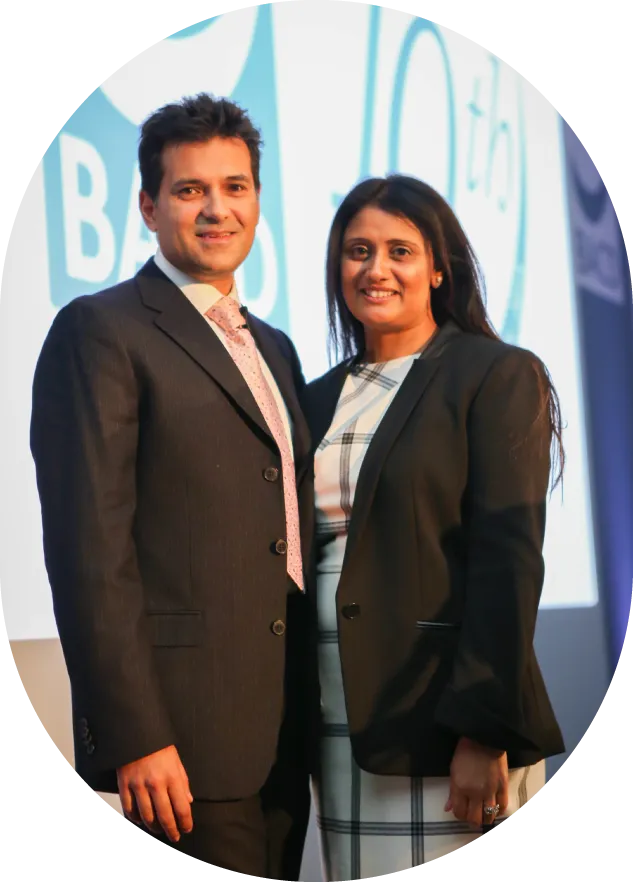
Rahul and Bhavna Doshi have used the treatment coordinator role in practice since 1997. The principle was simple: give patients enough time and support to understand a larger treatment decision without forcing that conversation into the final minutes of a clinical appointment.
That's still true in plenty of practices today. But trust and time don't sit well together. A dentist running fifteen minutes behind on a Tuesday afternoon does not have much space for a big treatment decision. A treatment coordinator, properly used, gives that decision the room it needs without eating into the clinical day.
The signs a practice usually shows before it brings one in
Not every practice needs a dedicated treatment coordinator on day one. In our experience, a few signs tend to show up before the case for one becomes obvious.
● Treatment plans get presented, then quietly go cold with no one chasing them
● The dentist is doing the cost conversation in the last five minutes of an appointment
● Reception fields patient questions about treatment they were never briefed on
● Bigger cases stall at “I need to think about it” more than smaller ones do
● Nobody in the practice can say, without checking, how many open plans are still waiting on a decision
If two or three of these sound familiar, the gap probably already has a cost attached to it, even if nobody has measured it yet.
What changes when the role is done properly
Priti Patel arrived at her practice as a dental nurse with, in her own words, no real direction. “It was just going from point A to point B,” she says. “There was no meaning to it.” DWB's coaches spotted that she was good with people and moved her into a treatment coordinator role: the bridge between patient and dentist.
Her first case as a TCO was a £10,000 treatment plan. Before, the practice had struggled to get patients past £2,000. She describes it as an emotional moment.
Four years on, she had a £45,000 case in progress. “I know this works,” she says. “The systems, the teachings, all of it works.”
That's not persuasion getting better overnight. It's a process someone can actually follow, and the confidence that comes from knowing it works, appointment after appointment, not just on a good day.
Dr Neresh Behari and Dr Usha Ramjas had strong clinical training and successful practices in Hampshire and West Sussex. Their patient communication and case acceptance weren't matching it, though. They brought in a treatment coordinator and restructured their diary around treatment complexity.
Dr Behari calls the TCO “the essential bridge between us, the dentists, and our patients.” Fifteen years later, he calls the whole change “probably the single most important thing I have done in my professional career.”
Dr Philip McCauley built a boutique implant practice from scratch with his wife and had no built-in patient pipeline to fall back on. Alongside systemising his marketing, he put a treatment coordinator in place to manage patient communication properly. Five years on, his practice has placed over 2,700 implants with continuous year-on-year growth. Case acceptance sits above 95 per cent.
What links these three practices isn't the size of the case or the specialism involved. It's that someone owned the space between diagnosis and decision, with a clear enough process that the result wasn't dependent on one person's charm on any given day.
Why a person alone isn't enough
A dental treatment coordinator UK practices bring on needs the same thing underneath the job title: a documented process, not just a good personality. Here's the part practices get wrong when they set up a TCO role dental practice teams are meant to rely on. They give someone the title without building the system underneath it.
A treatment coordinator isn't there to be a better closer than the dentist. She's there to run a consistent journey, one that has to survive her going on holiday, not just perform when she's having a good week. If the process only lives in her head, the practice hasn't actually solved the underlying problem. It has just found someone temporarily good enough to paper over it.
Dr Jan Einfeldt, twenty years into running his Staplehurst practice, built structured patient journey systems from consultation right through to completion. He also introduced what DWB calls Communication Stacking for the harder decisions on bigger plans. Acceptance of larger, more comprehensive treatment plans increased as a result, not because one person got better at asking, but because the process got better at explaining.
Build the role this way. Write down the steps for the first conversation. Agree a clear way to present cost and options that doesn't sound like a script.
Put a follow-up process in place that doesn't rely on someone remembering to pick up the phone. Do that, and the role doesn't collapse the day your best TCO hands in her notice. A consistent approach to case acceptance can help make that process repeatable across the practice.
Should your practice have one?

Start with a plainer question. Who currently owns the conversation between “here's your treatment plan” and “yes, let's go ahead”? If the honest answer is nobody, or whoever's free at reception that day, that gap is worth measuring before you decide whether a dedicated role is justified. If it's the dentist, squeezed into the last five minutes of an appointment, you probably already know how that tends to go.
One thing worth saying plainly: this isn't about squeezing more money out of patients. The aim is for patients to feel more informed, not more pressured, because the role gives them time to understand the recommendation and ask questions.
People are more likely to say yes when they understand what they're agreeing to and trust the person explaining it. That isn't a sales trick. It's someone doing the job of explaining properly, with the time to do it.
Treatment plans shouldn't depend on which dentist happened to be in the room that day. What would change in your practice if that conversation simply stopped happening?
A wider dental practice coaching approach can also help practice owners identify where responsibilities, communication and processes need to be strengthened rather than treating the TCO role as an isolated fix.
If the aim is to build a practice where processes continue to work consistently as the team grows, DWB systems can provide a broader framework for putting those processes into practice.
For practices looking beyond one specific role and working towards stronger overall performance, high-performance coaching is another route to consider.
If you want help working out whether a treatment coordinator is the right next step for your practice, book a practice coaching call with us. We'll look at where your case acceptance is actually breaking down, and what a properly built role would need to look like for your team.
Frequently asked questions on Dental Treatment Coordinator
Does a treatment coordinator need a dental background?
Not necessarily. Priti Patel moved into the role from dental nursing, which gave her clinical fluency. What matters more is the ability to listen properly, explain clearly, and follow a process without cutting corners when the week gets busy.
How is this different from just training reception to sell more?
It isn't about selling. A treatment coordinator's job is to help a patient understand their options and make a decision they're comfortable with. Reception handles bookings and enquiries. A treatment coordinator owns the space between diagnosis and decision, a different skill that needs dedicated time, not a five-minute add-on to another role.
Is this only worth it for practices doing high-value treatment?
It matters more where decisions are bigger and patients need real time to weigh them up, particularly implants, orthodontics and full-mouth cases. But the underlying problem, plans stalling because nobody owns the follow-up, can show up at almost any price point.
What if I can't afford a dedicated hire yet?
Some practices start by giving an existing team member protected time and a proper process, the way Priti Patel's practice did, rather than hiring externally first. The system matters more than the job title at the start.
How long does it take to see results?
Priti Patel's transformation played out over four years, with the first big result showing up early. Expect the confidence and consistency to build steadily rather than instantly. That is exactly what makes a documented process worth building, instead of relying on one person's natural talent.
Does the treatment coordinator replace the dentist's role in the conversation?
No. The dentist still sets the diagnosis and the clinical recommendation. The treatment coordinator picks up the conversation from there, giving the patient the time and plain-English explanation that a packed clinical diary rarely allows for.
Sources: Priti Patel case study, Dr Neresh Behari and Dr Usha Ramjas case study, Dr Philip McCauley case study, Dr Jan Einfeldt case study.


Categories

Dr Rahul Doshi is a leading UK cosmetic dentist, entrepreneur and former Clinical Director of Dentex/PortmanDentex, with 25+ years of experience in dentistry and practice growth. As co-founder of Dental Wealth Builder, he helps dentists, practice owners and dental groups build profitable, scalable and high-performing businesses...Know more
Turn This Into a Plan for Your Practice
Reading is a start. The DWB Growth System turns it into a structured, step-by-step plan built around your practice, so you know exactly what to focus on first and why. No generic playbook, no pressure to sign up, just a clear path built for where you are right now.
About the Author
Dr Rahul Doshi
Dr Rahul Doshi, BDS (Lond.), LDSRCS (Eng.), is one of the UK’s most influential figures in cosmetic, comprehensive and business-led dentistry.
Widely recognised as one of the key dentists who helped introduce cosmetic dentistry to the UK over 25 years ago, Rahul is the founder of The Perfect Smile Studios and the Advanced Training Institute, where he trained dentists in Interdisciplinary Comprehensive Dentistry, including smile design, occlusion, treatment planning, full-mouth rehabilitation and advanced restorative care.
His experience extends far beyond clinical dentistry. Rahul has owned, led and scaled multiple award-winning dental practices, giving him first-hand insight into what it takes to build profitable, high-performing and team-led dental businesses. This practical experience now underpins his work with dental practice owners, multi-practice owners and dental groups who want to improve profitability, strengthen systems and scale with greater confidence.
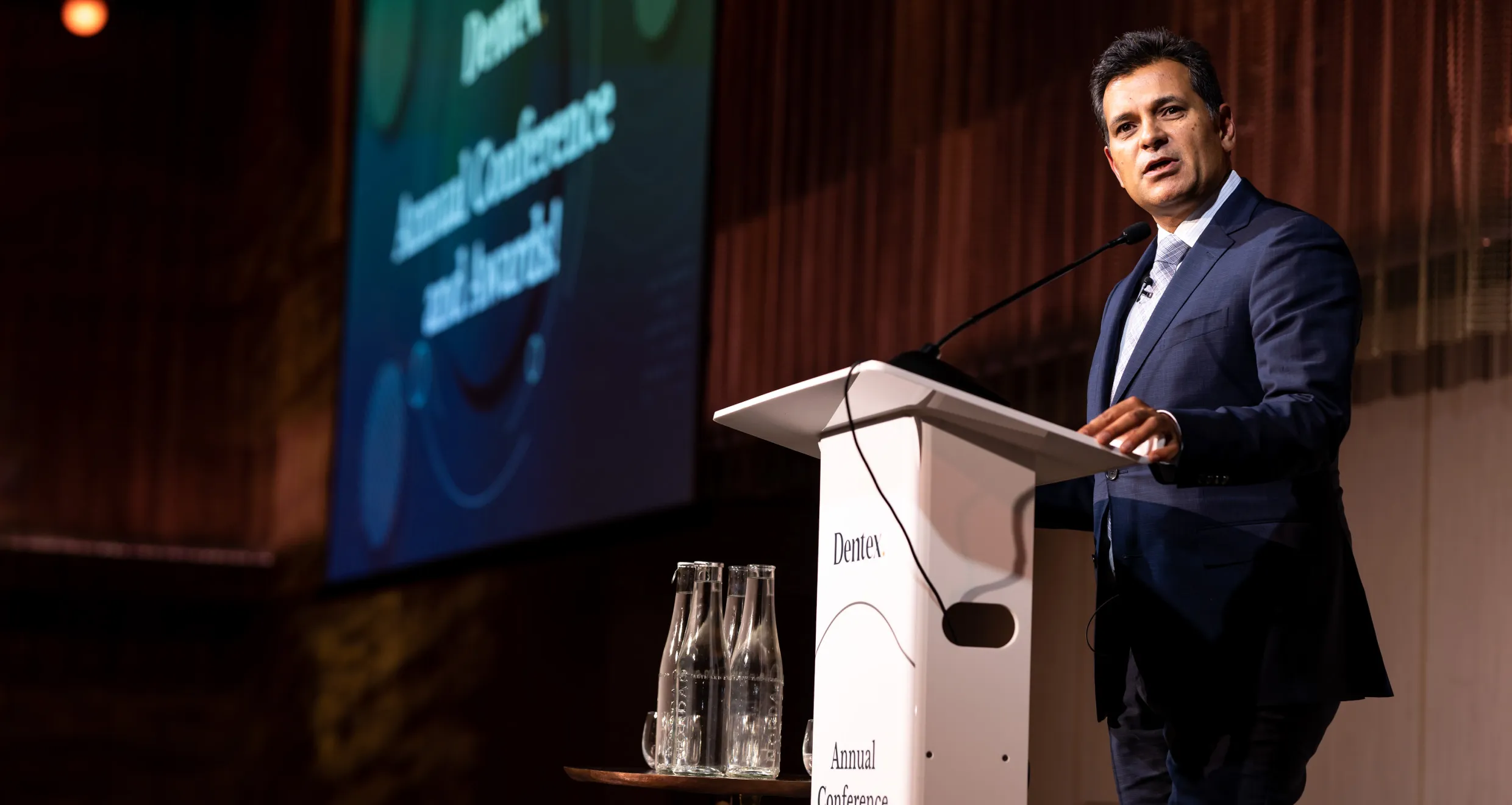
Rahul has held several major leadership positions within the profession. As Clinical Director for Dentex Healthcare and later PortmanDentex, he helped support the growth and scaling of the group from inception to 185 practices, contributing strategic clinical leadership across one of the UK’s major dental organisations. He was also Clinical Director of the monthly dental publication Premium Practice Dentistry and a founding board member of the British Association of Private Dentistry.
A Past President of the British Academy of Cosmetic Dentistry, Rahul has been a long-standing judge for the Private Dentistry Awards and Dental Industry Awards. He has also been voted one of the UK’s Top 50 most influential dentists and recognised by his peers for his outstanding contribution to cosmetic dentistry.
As an inspirational national and international speaker, Rahul has lectured on cosmetic dentistry, smile makeovers, treatment planning, laser dentistry, leadership and practice growth across the UK, United States, UAE, Italy, India, Germany, Sweden and South Africa.
His work and expertise have been featured widely in national and international media, including the BBC, ITV, The Times, Daily Mail, The Guardian, Evening Standard, Marie Claire, Tatler and leading dental publications.
As co-founder of Dental Wealth Builder, Rahul now uses his rare combination of clinical excellence, entrepreneurial experience, multi-practice scaling and large-scale group leadership to help dentists, practice owners and dental groups build more profitable, scalable and rewarding businesses.