The corporate sale guide
Selling a Dental Practice to a Corporate
Corporate buyers usually pay more than independent buyers, but they are buying something different. An independent dentist is buying a job and a business. A corporate is buying earnings that continue without you, inside a model they can integrate. That difference explains the higher multiple, the longer tie-in, the deferred payments and the far heavier due diligence.

>£225 million
additional profit created across DWB client practices
30 years
experience as owners of group practices
200+
dental practices coached worldwide
01 / The corporate sale guide
Who the corporate buyers are
If your practice fits what they want, a corporate sale can be the best financial outcome available to you. If it does not, you will spend six months in due diligence to receive an offer below what a local dentist would have paid without the scrutiny. This page explains how corporates decide, written from the side of the table most sellers never see.
The UK market has consolidated into a handful of recognisable buyer types, and they behave differently.
Large national groups operate hundreds of practices and buy to a defined model. They are systematic, their processes are well drilled, and their offers follow a formula. If you fit the formula the process is smooth. If you do not, they will either pass or reprice you late.
Mid-size and regional groups are often more flexible on structure and more interested in practices that do not fit the national template, including single sites with a strong private base or a specialist lean.
Private equity backed consolidators are buying toward their own exit. That can mean a strong price if your practice improves their overall numbers, and pressure on timing that has nothing to do with you.
Worth understanding: the group buying your practice usually has its own investors and its own exit horizon. Your practice is an input into someone else's valuation. Knowing where they are in that cycle tells you a great deal about how motivated they are.
02 / The corporate sale guide
Why a corporate pays more, and when it does not
Corporates commonly pay higher multiples than independent buyers, sometimes substantially higher. Three reasons:
They buy earnings, not employment. An independent dentist is partly buying themselves a job, so they discount for the risk they are taking on personally. A corporate does not work in your surgery.
Scale economies. Your lab costs, materials, insurance and back office get absorbed into their contracts. Profit they can add after purchase is profit they can pay for up front.
Their own multiple. Large groups are themselves valued on a multiple of earnings, often a higher one than they pay you. Buying your practice at 7 times and holding it inside a business valued at 10 times creates value on the day it completes.
The flipside is that all of this only applies if your practice suits the model. A corporate will not pay a premium for a practice that depends on the owner, has unstable associates, carries compliance risk, or sits somewhere they do not want to be. In those cases an independent buyer, who values the practice as a place to work rather than an asset to integrate, may well pay more.
03 / The corporate sale guide
What the corporate is actually buying
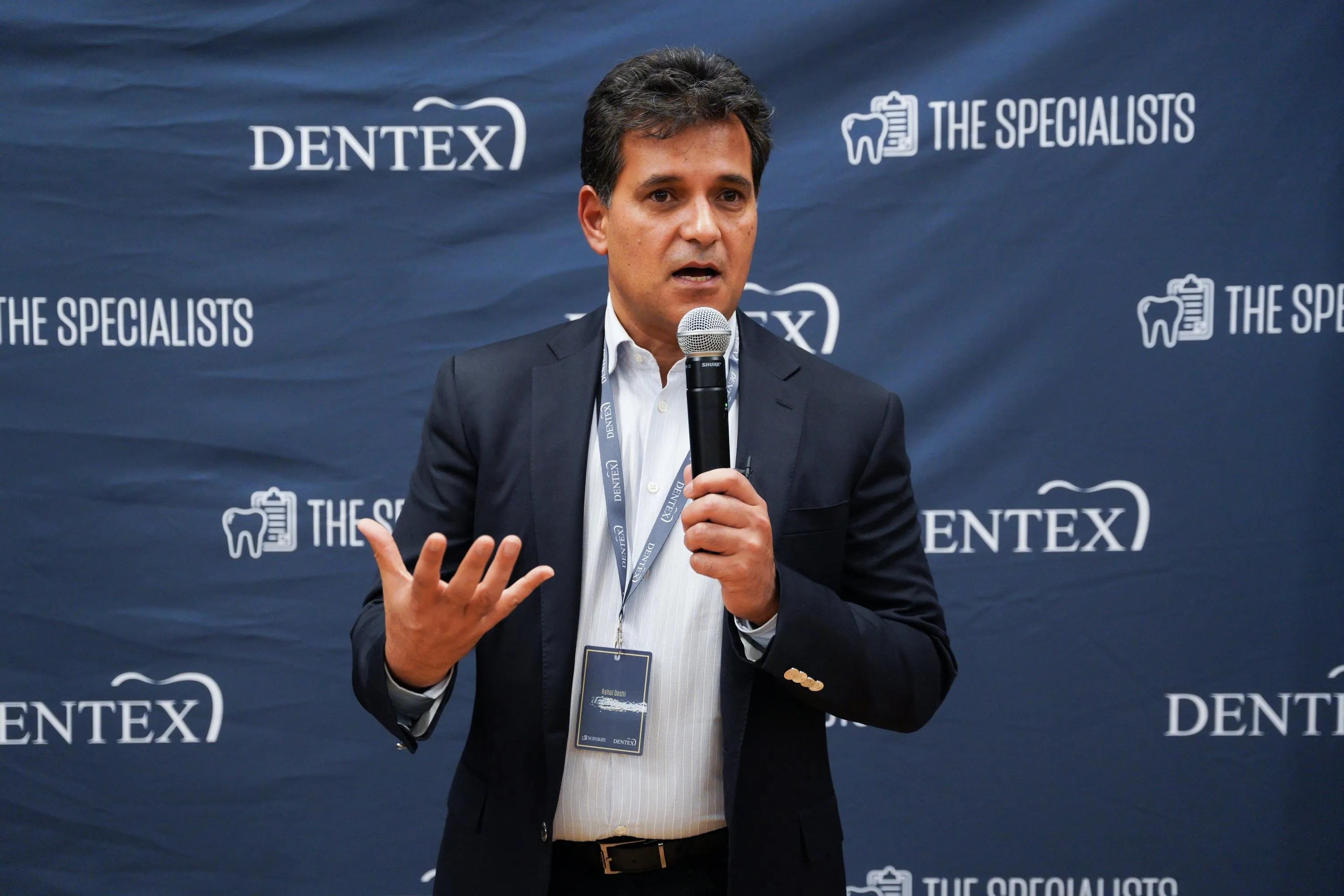
Dr Rahul Doshi was Clinical Director at Dentex through its growth to 180 practices in five years, and across more than 370 practices after the merger with Portman. Sitting on the acquiring side changes what you notice.
A corporate acquisition team is answering one question in several different ways: how much of this practice survives the current owner leaving, and how hard will it be to absorb? That breaks down into:
Transferable earnings. What proportion of income comes from associates and hygienists rather than the principal. This is the first number they calculate and it drives everything else.
The associate team. Are they on proper contracts, are they staying, and will they stay after the sale. An associate team that walks at completion destroys the model the price was based on.
Integration cost. Practice management software, compliance systems, payroll, supplier contracts. Practices that already run on documented systems are cheaper to absorb, and that shows up in the offer.
Clean records. CQC standing, clinical governance, radiography audits, HR files, associate agreements, lease. Due diligence is not a formality. It is where offers get reduced.
Growth headroom. Underused surgeries, low hygiene utilisation, no plan income, weak private conversion. They will find it, and they will price it as their upside rather than yours.

04 / The corporate sale guide
How corporate deals are structured
This is where sellers are most often surprised. The headline number is rarely the number you receive on completion day.
Upfront consideration. Paid at completion. Usually the majority, but rarely all of it.
Deferred consideration. Paid later, sometimes over several years. Industry commentary has described deferred structures extending as far as five years.
Earn-out or performance element. Payment conditional on the practice hitting agreed numbers after you have sold it. Counter-intuitive as that sounds, it is common, and it means part of your price depends on performance you no longer fully control.
Tie-in period. You agree to keep working for a defined period. Two years is a frequently cited norm, and longer is not unusual where the principal generates significant income.
Restrictive covenants. Limits on practising within a radius for a period after you leave. Read these before you sign, because they determine what you are allowed to do next.
Two practical consequences. First, compare offers on what lands in your account and when, not on the headline. Second, the more associate-led your practice is, the smaller the deferred and tied portion tends to be, because less of the risk sits with you personally.
05 / The corporate sale guide
What you give up
An honest page has to cover this, and a corporate's own marketing will not.
Final say. You move from owner to clinician or manager inside somebody else's structure. Most groups genuinely protect clinical freedom, and most sellers still find the loss of business autonomy an adjustment.
Your team's terms. Employees transfer with their existing terms protected, but their working environment changes. Suppliers, software, protocols and reporting lines usually change within the first year.
The relationship with the practice you built. Sellers underestimate this consistently. You spend two more years working in a business that carries your name and somebody else's decisions.
None of that makes a corporate sale wrong. It makes it a decision that should be taken with the full picture rather than the brochure.

06 / The corporate sale guide
Corporate or independent: how to decide
Price
Corporate
higher multiple if you fit the model
Independent
lower, but often simpler.
Paid when
Corporate
split across upfront, deferred and earn-out
Independent
usually more on completion.
Your involvement
Corporate
tie-in, commonly around two years
Independent
negotiable, often a short handover.
Due diligence
Corporate
extensive
Independent
lighter.
Best suited to
Corporate
associate-led practices with systems
Independent
principal-led practices.
Timeline
Corporate
faster once terms agree
Independent
slower, often finance dependent.
The blunt version: if most of your income walks out with you, a corporate will price that risk and an independent dentist will not, because they intend to do the work themselves. Know which practice you own before you choose which buyer to approach.
07 / The corporate sale guide
How to make your practice corporate-ready
If a corporate sale is the goal, the work is structural and it takes years rather than months.
Move clinical income off the principal and onto a stable, properly contracted associate team. Get associate agreements onto current market terms, so the buyer does not restate your profit downward. Build recurring income through plan patients, which corporates value for its predictability. Raise hygiene utilisation, so the upside is in your price rather than their business case. Document the systems: clinical protocols, HR, compliance, reporting. Clean the paperwork now, because everything unresolved becomes a price reduction during due diligence. Produce three consistent years of accounts rather than one strong one.
Every item on that list raises what a corporate will pay. Every one also makes the practice more valuable to an independent buyer, and more pleasant to own if you decide not to sell at all. That is why it is worth starting before the decision is made.

08 / Your questions
Frequently Asked Questions
Do corporates pay more for a dental practice?
Usually yes, where the practice fits their acquisition model: associate-led, systems in place, clean compliance. For a principal-dependent practice a corporate will often pay less than an independent dentist would, because they are buying earnings rather than a position to work in.
How long do I have to stay after selling to a corporate?
A tie-in of around two years is commonly cited, and longer where the principal produces a large share of clinical income. The more associate-led the practice, the shorter and looser the commitment tends to be.
Will I get all the money at completion?
Rarely. Corporate deals typically split the price into upfront consideration, deferred payments over a period that can extend to several years, and sometimes an earn-out tied to performance after the sale. Compare offers on timing as well as total.
What happens to my team?
Employees transfer with their terms protected. In practice, suppliers, software, protocols and reporting lines usually change during the first year, so prepare your team for a change of environment rather than a change of contract.
Can I approach a corporate directly?
You can, and groups have acquisition teams who will take the call. Whether you should depends on how ready your practice and paperwork are. An approach made before the business is prepared invites a low anchor you then negotiate up from.
How long does a corporate sale take?
Once heads of terms are agreed, corporate transactions often move faster than owner-occupier sales, because the buyer has done it many times and is not waiting on personal finance. The preparation beforehand is the long part.
09 / The next chapter
Work out which buyer your practice is built for
The most expensive mistake in this market is approaching a corporate with a practice that is not ready, and accepting the price that follows. The second most expensive is assuming a corporate is the only option.
Your next chapter