Business mentorship
Business Mentorship for Dentists
A mentor has done the thing you are trying to do and tells you what they learned. A coach asks questions that help you find your own answer. A consultant does the work for you. All three are useful. They are not interchangeable, and choosing the wrong one wastes a year.

>£225 million
additional profit created across DWB client practices
30 years
experience as owners of group practices
200+
dental practices coached worldwide
01 / Business mentorship
The three things, honestly described
Most of the UK dental market uses these words as if they mean the same thing. They do not, and the difference decides what you get for your money.

Mentorship
What it is
Someone further along the same road, telling you what they did and what it cost them
Best when
You face a decision they have already faced: buying, scaling, hiring, selling
Weakness
Their route may not be your route. A good mentor says so

Coaching
What it is
Structured questioning and accountability that gets the answer out of you
Best when
You broadly know what to do and are not doing it
Weakness
If you genuinely lack the experience, questions alone will not conjure it

Consulting
What it is
Someone comes in, diagnoses, and builds the thing
Best when
A defined problem with a defined deliverable, or you have no capacity
Weakness
Capability leaves when they do, unless the handover is deliberate
In practice, most useful long-term relationships move between all three. The mistake is buying one and expecting another.
02 / Business mentorship
What mentorship gives you that a course cannot
Courses teach what worked. Mentors tell you what it cost, which is the part that never makes it onto a slide.
A course will show you a treatment coordinator role and explain why it works. A mentor will tell you that the first person you appoint will probably be the wrong one, that you will know within six weeks and do nothing about it for five months, and that the role only functions if you stop taking the conversations back off them. That second kind of knowledge is what stops you losing a year.
It matters most at the points where the decision is irreversible: taking on premises, buying a second site, restructuring associate agreements, turning down a corporate offer. Those are not situations where you want to be finding your own answer from first principles.

03 / Business mentorship
Who mentors you here
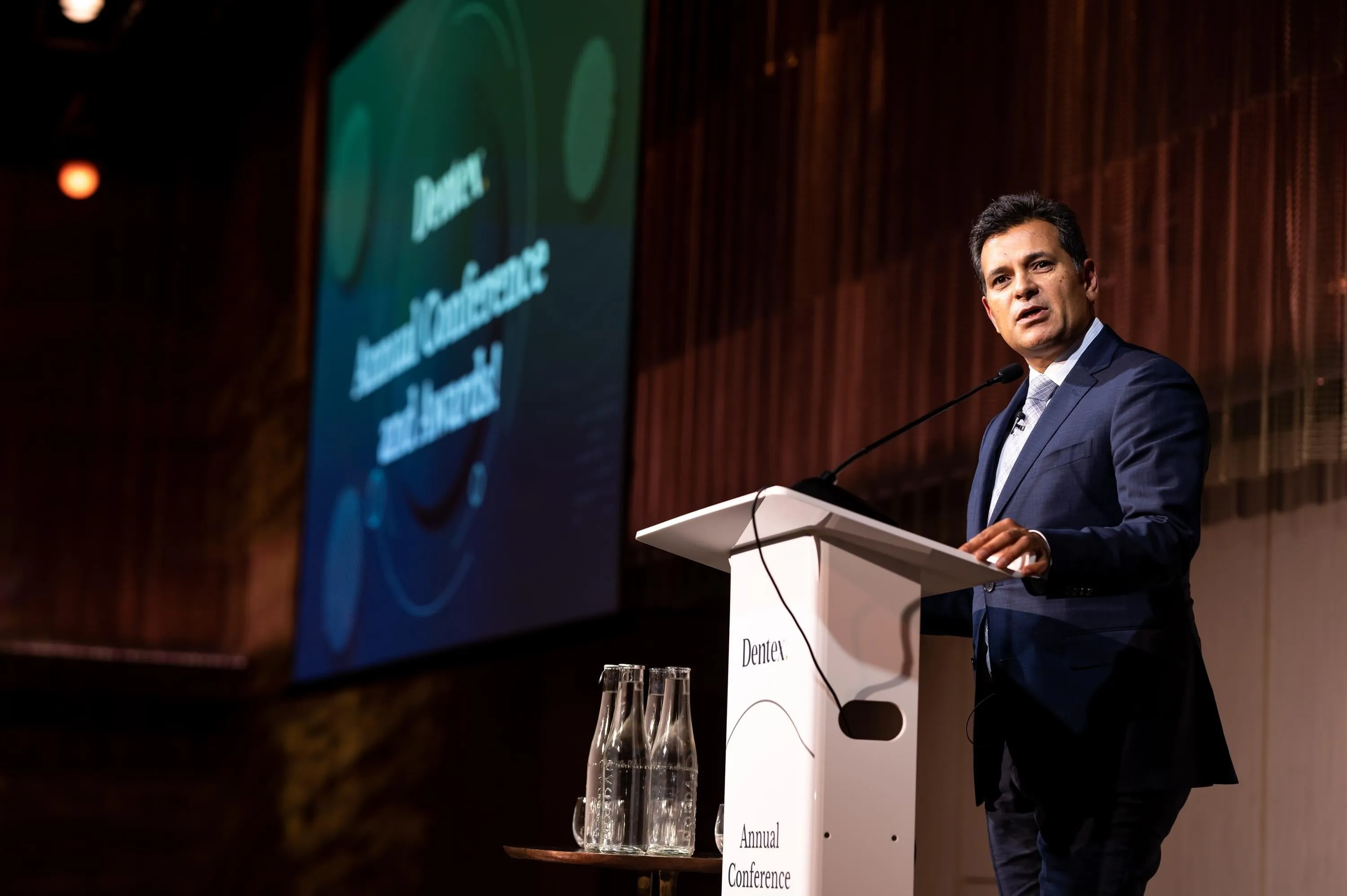
Dr Rahul Doshi and Dr Bhavna Doshi have between them built, scaled and sold multiple award winning dental practices across more than thirty years. Rahul served as Clinical Director at Dentex through its growth to 180 practices, and across more than 370 after the merger with Portman, which means he has also seen the same decisions from the buyer's side of the table. He is a Past President of the British Academy of Cosmetic Dentistry and a founding committee member of the British Association of Private Dentistry.
Bhavna is the author of Lead to Grow and Dental Alchemy, a keynote speaker, and a judge for the UK National Private Dentistry Awards, which has given her an unusually wide view of what separates practices that win from practices that merely work hard.
Neither of them is describing something they read about.
04 / Business mentorship
How it works in practice
Mentorship here is not a fixed programme, because the questions arrive in the order your practice produces them rather than in a curriculum. Typically it means regular sessions, direct access when a decision cannot wait, and honest answers including the ones you did not want.
05 / Business mentorship
Which one do you need?

If you know what to do but are not doing it, you need coaching.

If you are about to make a decision you cannot undo, you need mentorship.

If you need something built and have no capacity to build it, you need consulting.

If your clinical range is the constraint rather than the business, you need clinical mentoring, which is a different thing again.
06 / Your questions
Frequently Asked Questions
What is the difference between a dental business mentor and a coach?
A mentor draws on their own experience of the same situation and tells you what they would do. A coach uses structured questioning to help you reach your own decision. Mentorship transfers judgement, coaching builds accountability, and the right choice depends on whether your gap is knowledge or follow-through.
Do I need a mentor if I already have an accountant and a solicitor?
They answer the questions you know to ask. A mentor tells you which questions you have not thought of, which tends to be where the expensive mistakes live, particularly around associate agreements, second sites and exit timing.
Is mentorship worth it for a single site practice?
Often more so than for a group, because single site owners have nobody else in the building who has done the job before. Group owners usually have peers. A principal frequently has nobody.
Can mentorship and coaching happen together?
Yes, and in a long relationship they usually do. The balance shifts: more mentorship around big decisions, more coaching during implementation.
How is this different from your clinical mentoring?
Clinical mentoring works on your cases: planning, sequencing, presenting complex treatment. Business mentorship works on the decisions around the practice rather than inside the surgery. Plenty of dentists want both, and they are delivered separately.
Your next chapter