Exit planning & consulting
Sell Your Dental Practice for What It's Actually Worth
Whether you are two years from the door or already fielding offers, we help you build value before you sell and show you exactly what a buyer will score you on. Backed by 30+ years in practice ownership and a director's seat inside a group that acquired 180 practices.

>£225 million
additional profit created across DWB client practices
30 years
experience as owners of group practices
200+
dental practices coached worldwide
01 / Exit planning & consulting
Sound Familiar?
You have built something good. The diary is full, the team is settled, the reputation took years. And now you are starting to think about what happens next. Then the numbers come back and they are lower than you expected. Most owners meet the same three problems, usually too late to do much about them:
The practice runs on you
You are the highest-billing clinician, the one patients ask for, the one who signs everything off. That is a compliment professionally and a discount financially. A buyer looks at a practice built around one person and sees risk they have to price in.
You are being valued on a snapshot
Buyers look at the last two to three years of trading. Whatever you fix in the final six months barely registers, because it has not had time to show up in the accounts.
You do not know what you are being judged on
Your solicitor handles the contract. Your accountant handles the tax. Your broker finds the buyer. Nobody is sitting on your side of the table explaining why the offer came in where it did, or what would have moved it.
That last gap is the one we close.
02 / Exit planning & consulting
What Your Practice Is Actually Worth
Two practices can turn over the same money and sell for very different sums. The difference is rarely clinical. It is almost always structural.
Buyers do not value turnover. They value EBITDA, your profit before interest, tax, depreciation and amortisation, adjusted to show what the business earns independently of you. If you bill 60% of the clinical income yourself, a valuer will strip out the cost of replacing you and your EBITDA falls sharply. Then a multiple is applied. Broadly, and figures move with the market:
Principal-led
2.5–4.5×
Adjusted EBITDA, where the owner does most of the dentistry.
Associate-led
Around 7×
Paid by corporate buyers for practices that keep running when the owner steps back.
Those two figures contain the entire argument for planning an exit early. The same profit, earned in a different structure, can be worth double.
For a market benchmark, NASDAL's goodwill survey is the reference most UK valuers and accountants work from. Ask whoever values your practice which benchmark they are using and how they have adjusted your EBITDA, because those two decisions set your price long before anyone negotiates.

03 / Exit planning & consulting
What We Focus On
We are not brokers and we do not sell your practice for you. We are dental entrepreneurs who have built, scaled and sold practices, and who have bought them from the other side. Our work happens before the sale, in the window where value can still be changed.
We work alongside you to:
- Move clinical income off you and onto a stable associate team
- Rebuild the management layer so the practice runs without your daily involvement
- Tighten financial reporting so your accounts show the profit you actually make
- Normalise EBITDA properly, so you are not talked down during due diligence
- Fix the contracts, compliance and governance a buyer will comb through
- Reduce patient and referral concentration that makes income look fragile
- Decide whether to sell now, in three years, or restructure and keep going
Some of that takes months. Most of it takes longer. The owners who get the best outcomes are the ones who started before they were ready to leave.
04 / Exit planning & consulting
What a Corporate Buyer Actually Assesses
This is the part almost nobody writes about, because almost nobody advising you has sat on the buying side.
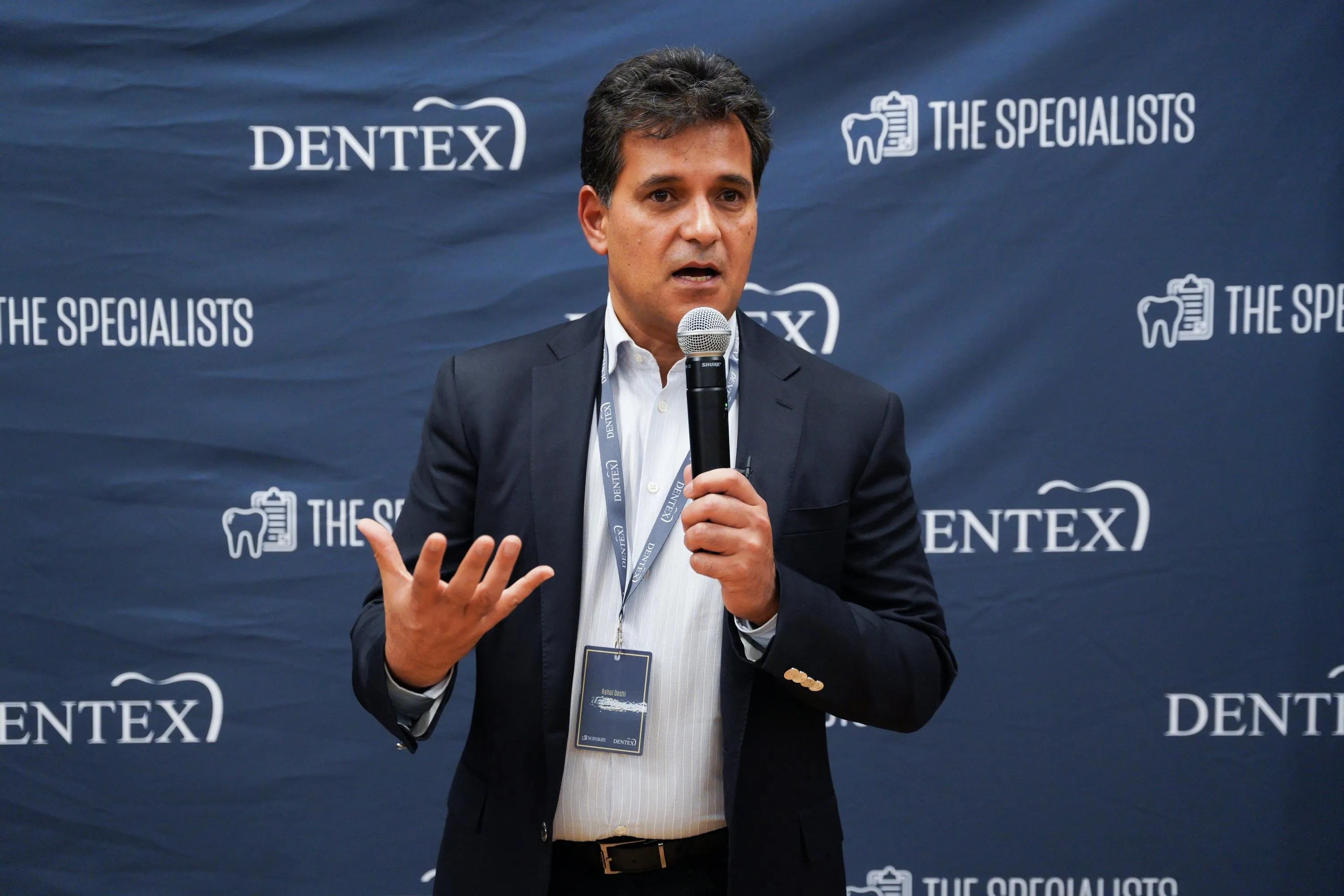
Dr Rahul Doshi was Clinical Director at Dentex while it grew to 180 practices in five years, and after the merger with Portman he was involved across more than 370 practices supporting 1.5 million patients. He has reviewed practices as an acquirer, not just as an owner.
None of what follows is secret. It is simply invisible from where most sellers are standing, and by the time a broker introduces you to a buyer, the scoring has already happened.
05 / Exit planning & consulting
What the Buying Side Scores You On

Owner Dependency
What happens to income if you leave? If most of it goes, expect a lower multiple or a long tie-in. The single most expensive structural flaw a practice can carry into a sale.

The Associate Team
Contracted properly, staying, and able to absorb your list. Three settled associates on sound agreements is a fundamentally different asset from high turnover and handshake arrangements.

Quality of Earnings
Not the headline profit, but how repeatable it is. One exceptional year raises questions rather than the price. Consistency beats a spike every time.

Compliance & Governance
CQC standing, records, radiography audits, decontamination. None of it adds value when right. All of it costs you when wrong, because it becomes a warranty risk.

Patient Mix & Concentration
A book weighted toward one high-value treatment, one referrer, or one clinician's following looks less secure than a broad, recurring base.

Systems That Transfer
Documented processes, a working management structure, clean data. Anything that only exists in your head is value that does not transfer.
06 / Exit planning & consulting
Independent Buyer or Corporate?
Both routes are legitimate, and they suit different owners.

Independent buyer
Usually a dentist buying their first or second practice. Often a lower multiple, but a cleaner break, more flexibility on timing, and a handover you can shape. Frequently the more realistic route for a principal-led practice.

Corporate or group buyer
Can pay considerably more for the right practice, but is buying a system rather than a job. Expect them to want an associate-led structure, documented processes, your continued involvement for a period, and far more rigorous due diligence.
The choice is not really "who pays most". It is which buyer your practice is currently built for, and whether you have time to build it for the other one.
07 / Exit planning & consulting
What You'll Walk Away With
- A clear, evidence-based view of what your practice is worth today and why
- A plan to close the gap between that number and the one you want
- A structure that keeps producing whether you are in the building or not
- Accounts and systems that stand up to due diligence without drama
- Confidence about which buyer type fits your goals
- A defined timeline, so the decision is yours rather than the market's
Whether you sell in eighteen months or decide to stay another five years, you end up owning a better business. That is the point.

08 / Exit planning & consulting
Why It Works
We are Dr Rahul and Dr Bhavna Doshi. We have built, scaled and sold multiple award-winning dental practices over more than thirty years, and trained over 7,000 dentists and their teams through The Perfect Smile Advanced Training Institute.
Rahul has also worked as an acquirer, as Clinical Director of Dentex through its growth to 180 practices and across 370 practices after the Portman merger. He is a Past President and Board Director of the British Academy of Cosmetic Dentistry, and a founding committee member of the British Association of Private Dentistry.
So when we tell you what a buyer will question, it is not a guess. We have asked those questions ourselves. This isn't theory. It is what we did with our own practices, and what we have guided hundreds of owners through since.
09 / Exit planning & consulting
What Working Together Looks Like
01
Discovery call
Tell us where the practice is, where you want to be, and roughly when. No charge, no pressure.
02
Valuation and readiness review
We look at your numbers the way a buyer will, and show you what they will see.
03
Value-building plan
A prioritised programme focused on the things that actually move the multiple, sequenced against your timeline.
04
Ongoing support through to exit
We stay with you through preparation, marketing, due diligence and negotiation, working alongside your broker, accountant and solicitor rather than replacing them.

10 / Your questions
Frequently Asked Questions
How long does it take to sell a dental practice?
Most sales complete somewhere between five and twelve months from first approach, depending on buyer type and how ready your paperwork is. Corporate transactions tend to move faster than owner-occupier sales once terms are agreed, largely because the buyer has done it before. The preparation that protects your price takes considerably longer, which is why we suggest starting two to three years out.
What reduces a dental practice's value most?
Owner dependency, by a distance. If the practice cannot produce without you, a buyer is purchasing your goodwill rather than a business, and they will price and structure the deal accordingly. Weak associate contracts and inconsistent compliance records come next.
Should I sell to a corporate or an independent buyer?
It depends on what you have built. Corporates pay more for associate-led practices with transferable systems, and expect you to stay involved. Independent buyers offer a cleaner exit and more flexibility, often at a lower multiple. We help you work out which your practice currently suits.
Do I have to keep working after the sale?
Frequently, yes, particularly with corporate buyers, who commonly ask principals to remain for a period after completion. The stronger your associate team, the shorter and looser that commitment tends to be.
When should I start preparing to sell?
Two to three years before you want to leave. Buyers look at several years of trading, so changes made in the final months rarely show up in the accounts in time to affect the price.
Do you sell the practice for us?
No. We are not brokers. We prepare the business, tell you what it is worth and why, and support you through the process alongside the broker, accountant and solicitor who handle the transaction.
11 / The next chapter
Ready to Find Out What Your Practice Is Worth?
The best time to start was three years ago. The second best is before you tell anyone you are thinking about it.
Your next chapter