Will AI Replace Dental Business Coaching? Here's the Answer

>£225 million
additional profit created across DWB client practices
30 years
experience as owners of group practices
200+
dental practices coached worldwide
AI will not replace dental business coaching, and the reason is specific. AI is very good at finding patterns in data. It is no good at all at the human judgment required to act on them. Diagnostic tools like Pearl and Overjet now flag carious lesions on radiographs with accuracy that rivals experienced clinicians. Practice management platforms such as Denticon and Dentrix Ascend analyze appointment patterns, predict cancellations, and automate patient recall without a single phone call. If systems are doing more of this work, and doing it well, what is actually left for a business coach to contribute?
The judgment. The leadership. The conversation you have been avoiding with your associate for six weeks.
AI can tell you that your Tuesday afternoon appointments have a 34 percent no show rate. It cannot tell you why your team resists the recall protocol you introduced three months ago, or how to fix that without damaging trust you spent years building. That gap, between information and action, is where coaching lives. And it is not shrinking as AI improves. If anything, it is getting more important, because the practices adopting these tools fastest are discovering that the technology is the easy part.
What AI Can Actually Do, and Where It Stops
AI is excellent at pattern recognition at scale. Beyond diagnostic imaging, tools like Weave and CareStack now handle automated patient communication: reminders, recall follow ups, review requests, all running without a team member picking up a phone. Scheduling software can flag that new patient enquiries peak on Thursday evenings and that nobody is monitoring the practice inbox at that time. Case acceptance software can show you that treatment plans above 2,000 pounds see acceptance rates fall sharply without a follow up call within 48 hours.
According to a peer reviewed 2022 survey of 302 dental clinicians published in Medicina, the leading concerns about AI in dental practice were not about diagnostic accuracy. They were about responsibility for machine errors and data security or privacy, both rated as more serious concerns than whether the tools actually worked. Only 37.1 percent of respondents rated their own understanding of AI as average, with nearly a quarter rating it very poor. That is a telling detail. The technology is often ahead of the practice's ability to govern it, communicate it to patients, and train a team to use it with confidence. None of that is a software problem. It is a leadership problem.
What AI cannot tell you is why your front desk team is quietly resisting a new system, or how to address that without damaging the goodwill you have built with them over a decade. It cannot help you decide whether to expand into a second site or consolidate what you already have. It cannot work through what you actually want the practice to become, or whether the work still feels meaningful to you. It cannot have the conversation with your associate that has been necessary for six weeks and that you keep finding reasons to postpone.
The information AI provides is genuinely valuable. The judgment about what to do with it, and the human capacity to lead people through the consequences of those decisions, remains entirely yours.
The Change Management Problem AI Creates
Introducing AI into a dental practice is not just a technology decision. It is a leadership challenge, and one that tends to surface quickly and awkwardly if it has not been thought through beforehand.
We coached a practice manager last year whose authority had rested, in part, on knowing things the principal did not: which patients were difficult, which hygienists ran behind schedule, which numbers looked soft before month end. When a new practice management dashboard made that information visible to everyone at once, she did not sabotage it, but she also did not champion it. She quietly stopped flagging issues she used to raise proactively, because the tool now seemed to be doing her job for her. It took a direct conversation, not a training session, to rebuild her sense of purpose in the new system. No AI vendor includes that conversation in the onboarding package.
The front of house team that has managed patient communications a particular way for years does not automatically embrace an automated system that shifts their role. The associate who has been treatment planning by instinct is not immediately comfortable with a diagnostic tool that surfaces findings they would not have flagged themselves. None of this means AI should not be introduced. It means the introduction requires the same quality of leadership and communication that any significant change requires.
The principals who get the best results from new technology are the ones who have invested enough in their own leadership to bring the team with them, rather than simply announcing the change and expecting compliance. This is where coaching addresses something technology cannot: the human dynamics that determine whether a good tool gets used well or quietly abandoned. Strong transformational leadership becomes even more important when practices are navigating rapid technological change, not less.
The Dimensions of Practice Ownership That Data Cannot Reach
There are aspects of running a dental practice that no analytic tool will ever illuminate. The principal who is generating strong revenue but lying awake at 3am, wondering whether the practice is consuming more than it is giving back. The clinician who built something impressive and now realizes the business has grown in a direction they did not entirely choose. The practice owner who has a genuinely capable team around them but has not found a way to step back from daily operations without feeling like they are abandoning their responsibilities.
These are not minority cases. They are the conversations we have with principals regularly, and they are the ones that change the trajectory of a practice more durably than any operational improvement. A principal who has clarity about what they are building and why, who has worked through the leadership challenges that come with growth, and who has found a way to sustain their own purpose and energy over the long term, runs a fundamentally different practice from one who has not. No algorithm surfaces that distinction or helps close it.
This is often why many principals explore the benefits of coaching when they feel operational success is no longer enough on its own. One case we discuss in our client case studies involved a principal with excellent clinical and financial results who nonetheless felt disconnected from the practice they had built. The metrics were fine. The ownership experience was not. AI has nothing to say about that conversation.
How Coaching and AI Work Best Together

The question is not AI versus coaching. It is how a practice uses both well.
AI tools that give you clean, accessible data about your practice performance are genuinely useful, and a good coach helps you read that data with better questions than the obvious ones. Not "why is revenue flat?" but "what has changed in the patient journey that would account for this, and where do we look first?" Not "how do we reduce cancellations?" but "what does a high cancellation rate tell us about how patients currently feel about their appointments, and is that a scheduling problem, a value problem, or something else entirely?"
The data narrows the territory. The judgment and the leadership work that follows remain human, and they remain the part where a practice owner most often needs a perspective that is both experienced and genuinely outside the system.
In our own coaching work, Rahul and I have found that the practices which make the best use of AI tools are the ones that were already well led before the technology arrived. A clear vision, a motivated team, a principal who knows how to communicate and delegate: these are the foundations that allow new tools to multiply their value. Without them, technology tends to amplify the existing problems rather than dissolve them. Practices that focus on building a clear vision are often far better equipped to integrate new technologies without losing direction.
Signs Your Practice Needs Coaching, Better AI Tools, or Both
A quick way to sort where your practice actually stands right now.
You likely need better AI tools first if: your team is spending hours a week on manual scheduling, recall, or radiograph review that software already does reliably; you have no visibility into cancellation or case acceptance patterns; your patient communication depends entirely on someone remembering to make a call.
You likely need coaching first if: you already have decent data but do not know what to do with it; your team is resisting a change you have already introduced; you are hitting your numbers but feel disconnected from why you started the practice; a conversation with a team member or associate has been overdue for weeks.
You likely need both, working together, if: you are introducing new AI tools into a team that has not been brought along on the reasoning for the change; you are scaling toward a second location and need both better systems and clearer leadership to support it; you have the data but the interpretation of it keeps producing the same unresolved argument at your practice meetings.
What This Means in Practice
The honest answer to whether business coaching adds value in an AI driven world depends on what the coaching actually is. Coaching that primarily helps with process implementation or data interpretation will, over time, find more of that work done by better tools. Coaching that addresses leadership, vision, team dynamics, and the personal sustainability of the principal is doing something AI is not designed to do and will not be doing in any timeframe relevant to running a practice today.
The question worth sitting with is not whether to use AI or a coach. It is whether you have the leadership foundations in place to get genuine value from either.
If you are curious about what that kind of coaching conversation looks like in practice, we would be glad to have it. Many principals begin by understanding how to choose the best coach for their practice before deciding on the right next step, and some start by hearing directly from other principals on our podcast.
FAQs on AI Replacing Dental Business Coaching
Will AI replace dental business coaches?
No. AI can identify patterns in scheduling, diagnostics, and patient communication, but it cannot make leadership decisions, resolve team conflict, or help a principal work through what they want the practice to become. Those remain human, judgment based tasks.
What is the difference between AI practice management software and a business coach?
AI software analyzes data and automates repetitive tasks such as recall reminders and appointment scheduling. A business coach works with the practice owner on leadership, vision, team dynamics, and the decisions that data alone cannot resolve. They address different problems and work best used together.
Can a dental practice run well with AI tools and no coach?
It can run efficiently on the operational side, but efficiency and leadership are not the same thing. Practices that adopt AI without addressing team buy-in, change management, or the principal's own clarity of direction often see tools underused or quietly abandoned within a year.
How do I know if my practice needs a business coach, better AI tools, or both?
If your team is spending significant time on manual tasks that software already handles well, start with tools. If you already have good data but are stuck on what to do with it, or facing unresolved team or leadership issues, start with coaching. Many practices need both at once, especially when introducing new technology to an existing team.
Does AI help with dental team leadership and communication?
Not directly. AI can surface information, such as a drop in case acceptance or a spike in cancellations, that gives a coach and a principal better material to work with. But the actual leadership conversation, and the trust building it requires, has to happen between people.
CITATION USED: Eschert T, Schwendicke F, Krois J, Bohner L, Vinayahalingam S, Hanisch M. "A Survey on the Use of Artificial Intelligence by Clinicians in Dentistry and Oral and Maxillofacial Surgery." Medicina (Kaunas). 2022 Aug 5;58(8):1059. PMID: 36013526. Verified via PubMed.


22 May 26
Categories


Dr Bhavna Doshi is a dental business coach, author, speaker and co-founder of Dental Wealth Builder, with over 30 years of experience in dentistry, practice ownership, leadership and business transformation..Know more
Turn This Into a Plan for Your Practice
Reading is a start. The DWB Growth System turns it into a structured, step-by-step plan built around your practice, so you know exactly what to focus on first and why. No generic playbook, no pressure to sign up, just a clear path built for where you are right now.
About the Author
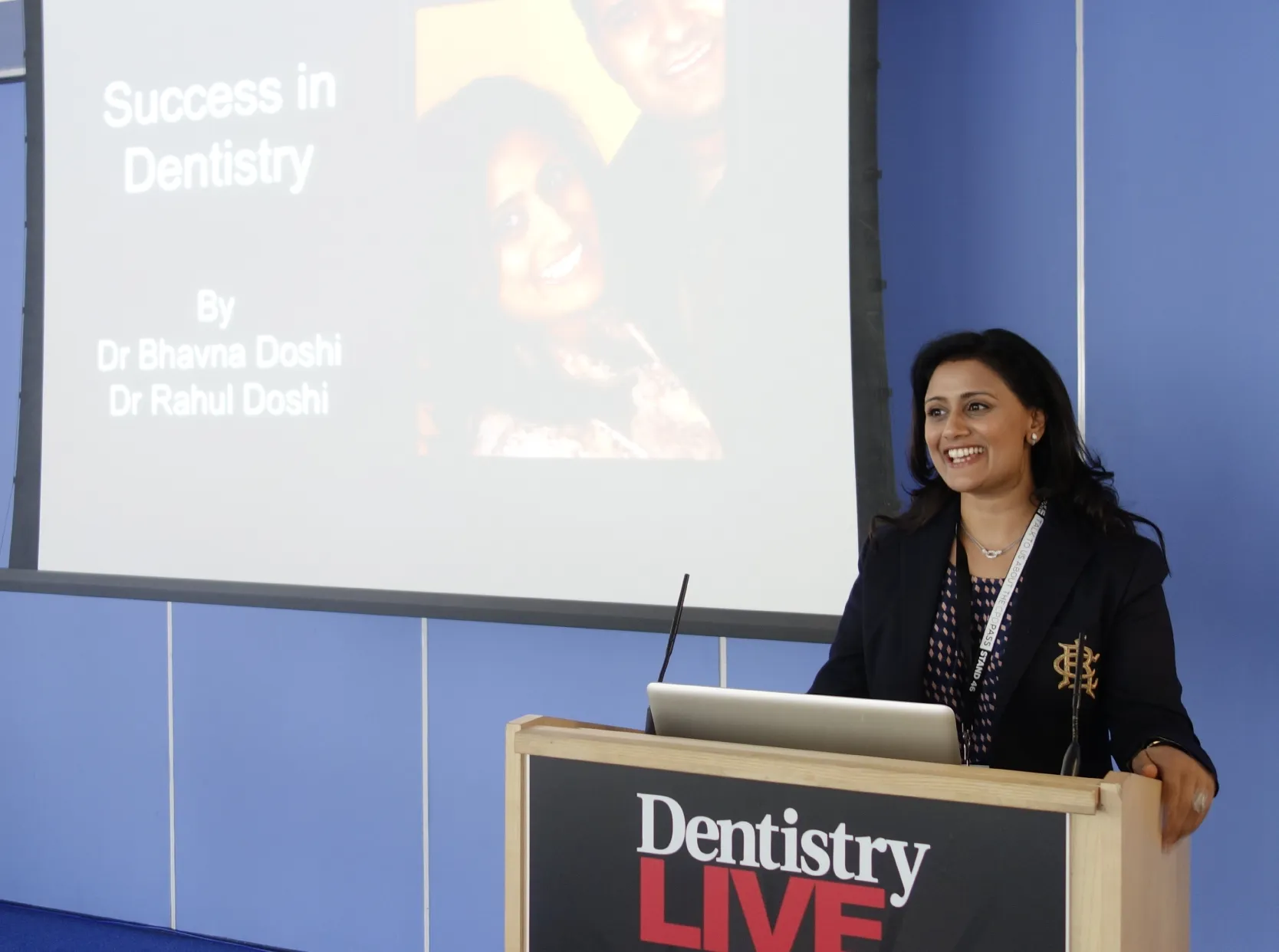
Dr Bhavna Doshi
Dr Bhavna Doshi is a dental business coach, author, speaker and co-founder of Dental Wealth Builder, with over 30 years of experience in dentistry, practice ownership, leadership and business transformation.
Before moving fully into coaching and consultancy, Bhavna built her career as a leading UK cosmetic dental surgeon and co-founder of The Perfect Smile Studios and the Advanced Training Institute. Through this work, she gained first-hand experience of building, leading and growing high-performing dental practices while developing the systems, communication frameworks and leadership strategies now taught through Dental Wealth Builder.
As CEO of Dental Wealth Builder, Bhavna helps associates, practice owners and dental groups increase profitability, improve team performance and create more structured, sustainable growth. Her work focuses on change management, transformational leadership, patient communication, case acceptance, marketing strategy and practical business systems that allow dental practices to grow without becoming more stressful or dependent on the owner.
Bhavna is the bestselling author of Lead to Grow and Dental Alchemy, where she shares practical frameworks for leadership, team alignment and successful business transformation in dentistry. She is also an international keynote speaker and a respected judge for the UK National Private Dentistry Awards, giving her deep insight into the qualities that define successful, award-winning practices.
Her coaching style is built on real-world experience, not theory. Having owned, grown and led dental businesses herself, Bhavna understands the pressures practice owners face and helps them create practices that are more profitable, more organised and more rewarding to lead.
Bhavna has featured in national media including The Times, The Independent, The Guardian, Tatler and Extreme Makeover UK.