Take Back Control of Your Dental Practice
Leading your team, managing the business, and growing while keeping patients happy — it’s overwhelming. We’ll help you build a practice that runs smoothly without constant oversight.
Sound Familiar?
Most dentists we coach are brilliant clinically but behind
the scenes, they are stretched. Sound like you?
- A team lacking alignment and accountability
- Constant firefighting, decision fatigue, and daily chaos
- Unpredictable profits and rising costs
- Too much managing, not enough treating
- Poor returns from marketing
- Struggling to attract quality new patients
And the hardest part?
- You’re rarely able to switch off - even outside of work. But it’s not your fault - dental school didn’t prepare you to run a business. That’s where we come in.
Want these results for your practice? Let’s talk

Our Approach
We don’t believe in one-size-fits-all coaching. Our programme is tailored specifically to you & your team, your goals, and your challenges.
We start by pinpointing the real bottlenecks holding your practice back. Then, together, we build growth-focused systems, enhance your leadership, and establish a structure that supports consistent growth without the chaos.
You’ll receive hands-on, one-to-one guidance that’s clear, practical, and focused on making your practice work effectively for you - not the other way around. Ready to take control?
What coaching looks like week to week
Coaching is a word that covers a lot of ground, so here is what it means in this context.
It runs long enough for change to reach the accounts. Operational change in a dental practice takes two or three quarters before it shows up clearly in the numbers, and longer again before it holds without someone standing over it. Any programme promising transformation in a few weeks is describing a workshop and calling it something else.
Sessions have a structure, and the agenda belongs to you. There is a plan. The plan gets interrupted constantly, because practices generate problems on their own schedule rather than yours, and a coaching relationship that cannot absorb that is not much use in a real building.
Most of the work happens in the gaps. The session decides what changes. The fortnight afterwards is when the change either takes hold or quietly does not, and that gap is where coaching separates from advice. Good ideas are cheap. Someone noticing that you did not act on one is where the money goes.
Why the team has to be in the room
This single decision determines whether coaching works, and it is the one most often got wrong.
Coach the principal alone and you change the principal. They come back from each session clearer, more decisive, carrying a plan the team had no hand in. From the team's side this looks like the owner returning with another new idea, and whatever enthusiasm existed drains away inside a month. Everyone has seen this happen. Several of them have seen it happen more than once, which is why the resistance is quiet rather than loud.
Practices that genuinely change are the ones where the practice manager, the treatment coordinator and sometimes the whole clinical team sit in for the parts that concern them. It costs more time. It is harder to schedule around a full diary. It is also the difference between having a plan and having a practice that runs on one.
What gets measured
Most practices run on instinct and a monthly turnover figure. That tells you whether things feel better. It does not tell you what caused it, which means you cannot repeat it on purpose.
Early sessions establish what you are really working with. Revenue per clinical hour rather than per month. Case acceptance broken out by plan value instead of averaged into one meaningless percentage. Where new patients actually come from, which is reliably different from where everyone assumes. How much of the diary is productive. And how much of the business depends on you personally being in the building.
That last number is usually the uncomfortable one. It is also the number that decides what the practice is worth on the day you want to walk away from it.
The first three months
Not a fixed programme, though the sequence rarely varies much.
1. Find the real constraint. It is almost never the one named in the first conversation. Practices arrive certain they need more new patients and discover they are converting badly on the ones already walking through the door.
2. Fix something quickly. Visible, early, and enough to convince the team this is not the last initiative wearing a new hat. Momentum is an asset and it is easy to squander in month one.
3. Get the numbers in place. Dull work. Nothing after it can be judged without it.
4. Start on the structure. Diary, roles, fees, accountability. This takes the rest of the engagement and it is the part that lasts.
What You’ll Walk Away With
By the end of our programme, you’ll confidently be able to:
- Attract quality new patients consistently
- Lead your team with clarity and confidence
- Streamline operations to significantly reduce stress
- Build effective communication and accountability within your team
- Improve treatment presentations for higher case acceptance
- Grow your revenue sustainably without sacrificing your personal life
- Regain control, purpose, and enjoyment in your daily practice
This goes beyond business coaching it’s a transformation of your practice and your life. Want these results for your practice? Let’s talk
Why It Works
We’re not external consultants. We're dentists who have been in your shoes.
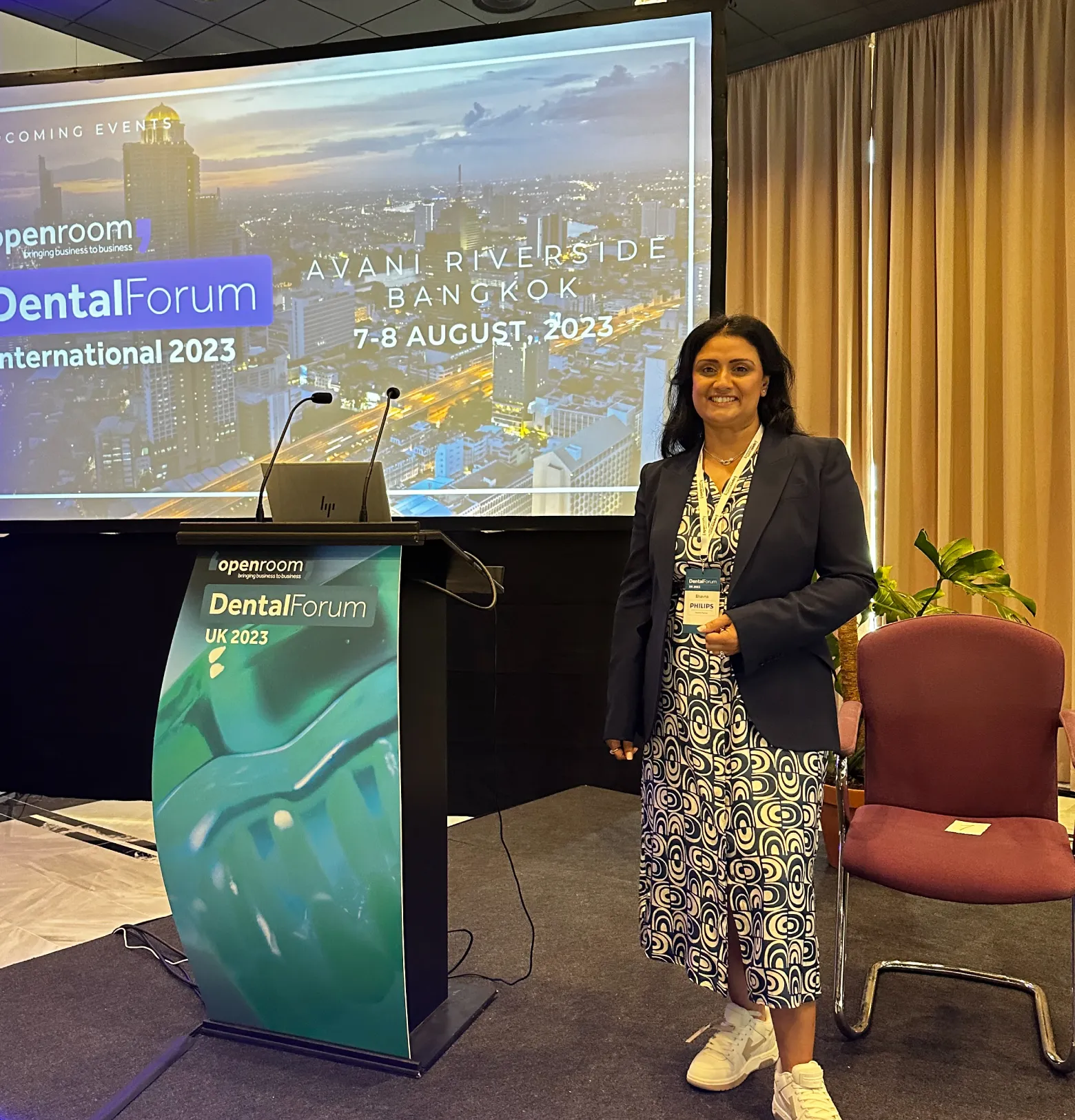
We’re Dr Rahul and Dr Bhavna Doshi, award-winning dentists, multi-practice owners, and coaches behind some of the UK’s most successful private dental practices. We’ve helped thousands of dentists transform chaos into clarity and achieve financial freedom.
From pioneering the treatment coordinator model in the UK to developing high-performance teams and scaling a dental group to over 180 practices, we bring unmatched, real-world experience to every coaching relationship.
This isn’t theory - this is practical, proven guidance tailored specifically to you.
Is This Coaching Right for You?
We work with people who are ready to evolve and we walk beside them every step of the way.
This programme is for you if:
- You own or run a dental practice and feel overwhelmed
- You want to grow but lack the strategy or confidence to get there
- You’re ready to lead with purpose not just survive each day
It might not be right for you if:
- You’re seeking shortcuts instead of meaningful change
- You’re not open to new ways of managing, leading, or thinking
- You’re looking for a quick fix rather than committing to long-term growth