One-to-one clinical mentoring
Master Complex Cases. Deliver Predictable Results.
One to one clinical mentoring built around your own cases, not a syllabus. Plan with more confidence, present bigger treatment, and deliver outcomes that hold up over years. With a mentor who has trained over 7,000 dentists and led the British Academy of Cosmetic Dentistry.
>£225 million
additional profit created across DWB client practices
30 years
experience as owners of group practices
200+
dental practices coached worldwide
01 / One-to-one clinical mentoring
Sound Familiar?
You are technically capable. Your hands are good, your outcomes are sound, and patients are happy with the work you do. And yet the bigger cases go elsewhere.
Most dentists who come to us are stuck in a recognisable place. They can do the dentistry, but they hesitate over comprehensive plans. They spot the full mouth case and treat one quadrant of it. They present a plan and watch the patient choose the cheaper option, then conclude the patient was not interested when the problem was the way the plan was explained.
Very little of this is a skills problem. It is a planning, sequencing and communication problem, and those are the things a course with thirty people in the room cannot fix for you.
02 / One-to-one clinical mentoring
This Is Not a Course
There are good courses in UK dentistry, and if you need taught technique in a specific discipline you should go on one.
This is different. You bring your own cases, in progress or in planning, and we work through them together. No cohort, no fixed syllabus, no learning a technique on a model you will not see again for a year.
The difference matters most on comprehensive cases, because the challenge there is rarely a single technique. It is knowing which sequence to follow, which compromises are acceptable, when to involve a specialist, and how to explain all of that to a patient in a way that makes sense to them.
That is a judgement problem. Judgement transfers through discussion of real cases with someone who has made those calls thousands of times.
What to expect
What a mentoring session actually involves
Most dentists arrive here having done plenty of courses, expecting something along the same lines. It runs differently enough to be worth describing.
You bring real cases. Not the tidy teaching examples, but the patient in your diary three weeks out whose treatment you are not sure how to sequence. Photographs, radiographs, study models, whatever you have. If the records turn out to be incomplete, that becomes the first conversation, because incomplete records are behind a large share of complex cases that go wrong later.
From there we work the case the way you would need to think about it on your own. What is the patient actually asking for, as opposed to what they said in the first five minutes. What do the records show. Where does the occlusion sit. Which options are genuinely realistic, in what order, and where are the risks hiding. You are not being handed a plan to copy. You are watching one get built, so the next one comes easier.
A fair amount of the time goes on the conversation rather than the clinical work. How you will put this to the patient. What you will say when they ask why it costs what it costs. What you will do in the silence afterwards, which for most dentists is the hardest part and the one they have never been taught. Planning and presentation are the same skill wearing different clothes, and separating them is why a lot of good planning never makes it as far as a patient.
The cases dentists bring
There is no set curriculum here. Cases arrive in whatever order your diary produces them, which is messier than a syllabus and considerably more useful. That said, the same handful of situations come around repeatedly.
• Full mouth rehabilitation, where the dentist can do every individual element but has never sequenced the whole thing
• Worn dentition, and the decision about whether to restore at the existing vertical dimension or change it
• Smile design cases where what the patient pictures and what is clinically achievable are some distance apart
• Complex restorative work already planned, where the dentist wants a second pair of eyes before committing
• Cases that went wrong, which are uncomfortable to bring and often the most productive hour you will spend
• Plans a patient turned down, worked back through to find out what happened in that room
People are usually surprised by the last one. A case that was accepted confirms what you already knew. A case that was declined tells you something you did not.
Who this suits, and who it does not
It suits dentists who are clinically solid and want to take on more ambitious work without the knot in the stomach. It suits people who have done the courses and still feel the distance between a training environment and their own surgery on a Tuesday afternoon. It suits anyone building a comprehensive private book who is tired of planning alone.
It is not implant mentoring. If you want supervised placement there are people in the UK who do that specifically and do it well, and we will point you towards them rather than pretend otherwise.
It is also not the right thing if your difficulty is regulatory or if you are in professional trouble. That is a separate kind of mentoring with a separate purpose, and organisations exist that specialise in it.
Then there is the awkward one. Sometimes the clinical work is fine and the business is the actual constraint. If that is the honest answer, say so on the first call. A number of dentists land here when what they need is practice coaching, and finding that out early saves everyone a wasted quarter.

03 / One-to-one clinical mentoring
What We'll Work On Together
Sessions are built around whatever you bring. Over time, most dentists want to cover:

Comprehensive assessment and diagnosis
Seeing the whole mouth and the whole patient, rather than the tooth in front of you.

Treatment planning and sequencing
The order decisions that make complex cases predictable, including where to build in review points.

Occlusion
The area that quietly decides whether extensive restorative work survives.

Smile design and aesthetic planning, including how to plan and communicate the outcome before you begin.

Full mouth rehabilitation
Approaching the cases most dentists refer away.

Interdisciplinary cases
Working with specialists, and knowing when to.

Case presentation and acceptance
Presenting comprehensive treatment so patients understand and choose it.

Managing cases that go wrong
Because they do, and how you handle that defines your reputation.
These are the same areas covered in the seven-day hands-on programme at The Perfect Smile Advanced Training Institute, delivered one to one and applied to your patients rather than to teaching models.
04 / One-to-one clinical mentoring
Where Clinical Meets Commercial
This is the part other mentors do not cover, and it is usually the reason dentists come to us rather than to them.
Complex treatment is not just a clinical challenge. It changes how your diary works, what your hourly yield looks like, how you price, and how much of your day is spent on work you find satisfying. A dentist who moves from single units into comprehensive care is changing their business as well as their clinical scope.
Get that transition wrong and you end up with long appointments, underpriced work and a diary that no longer pays. We have seen that happen to good clinicians repeatedly.
So we work on both. The clinical judgement, and the commercial consequences of using it: how to price comprehensive work properly, how to structure your diary around longer appointments, and how to build a patient base that wants this kind of dentistry.
05 / One-to-one clinical mentoring
Who This Is For
Mentoring suits you if you are: an associate or principal who is clinically sound and wants to take on more complex work; already attempting comprehensive cases and wanting a second opinion you trust; referring away cases you suspect you could handle with support; or building a private or mixed book and wanting the clinical range to match the ambition.
It is probably not for you if you are newly qualified and still building core speed and confidence. Foundation training and a strong practice environment come first. Come back when you have a few years of steady work behind you and specific cases you want to push further.

06 / One-to-one clinical mentoring
What You'll Walk Away With
- Confidence to plan and present comprehensive treatment, not just carry it out
- A repeatable planning process you apply to every complex case
- Better case acceptance, because the plan is explained in a way patients follow
- Fewer surprises mid-treatment, because the sequencing anticipated them
- Work that lasts, and the reputation that follows it
- A clear view of how this kind of dentistry should sit in your diary and your fees.
07 / One-to-one clinical mentoring
Why It Works
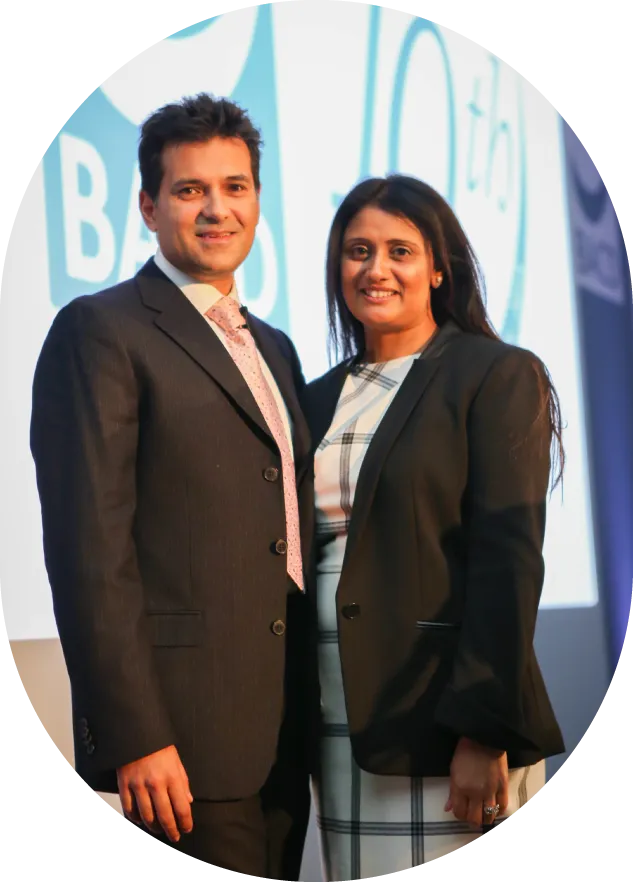
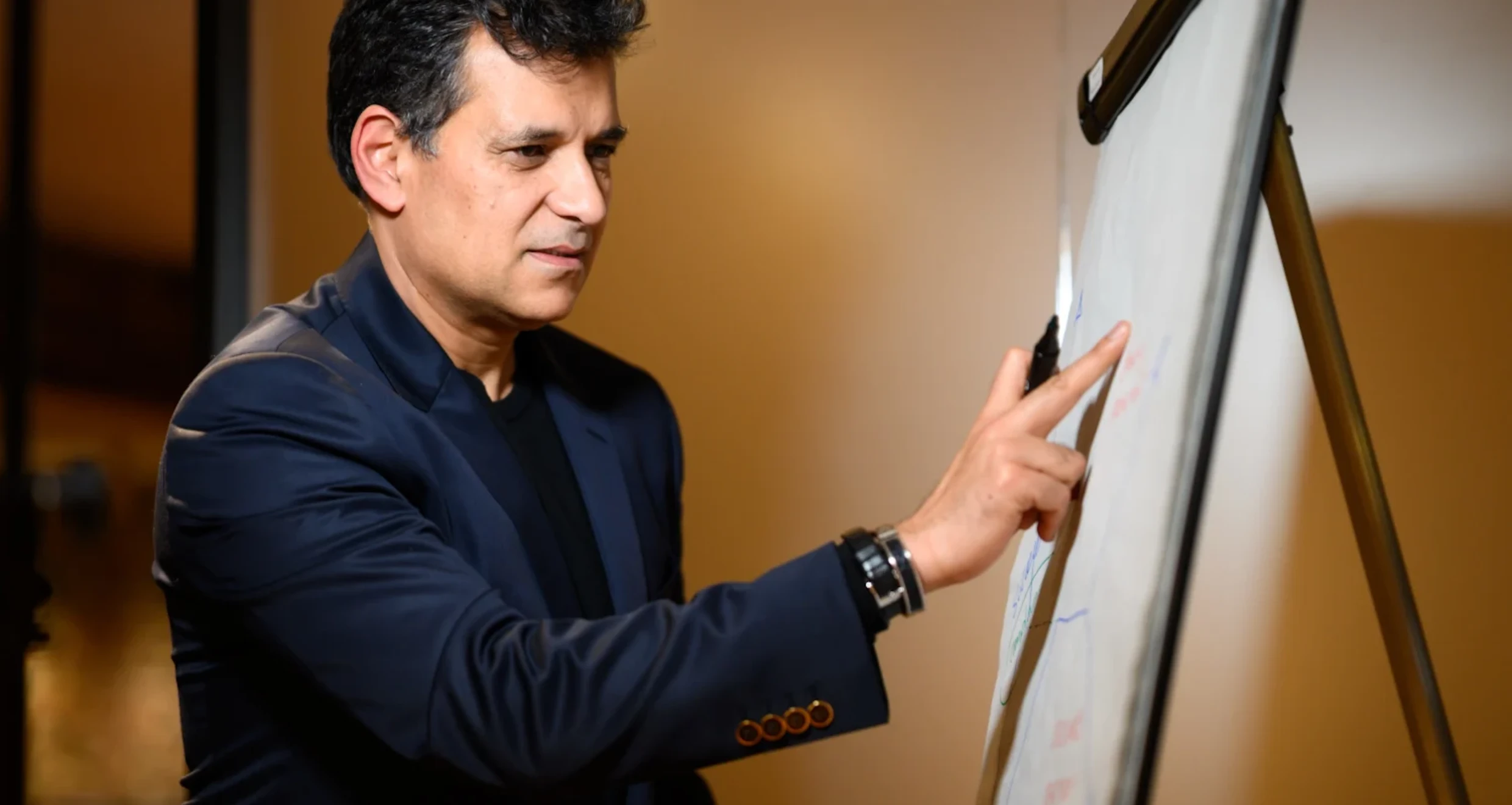
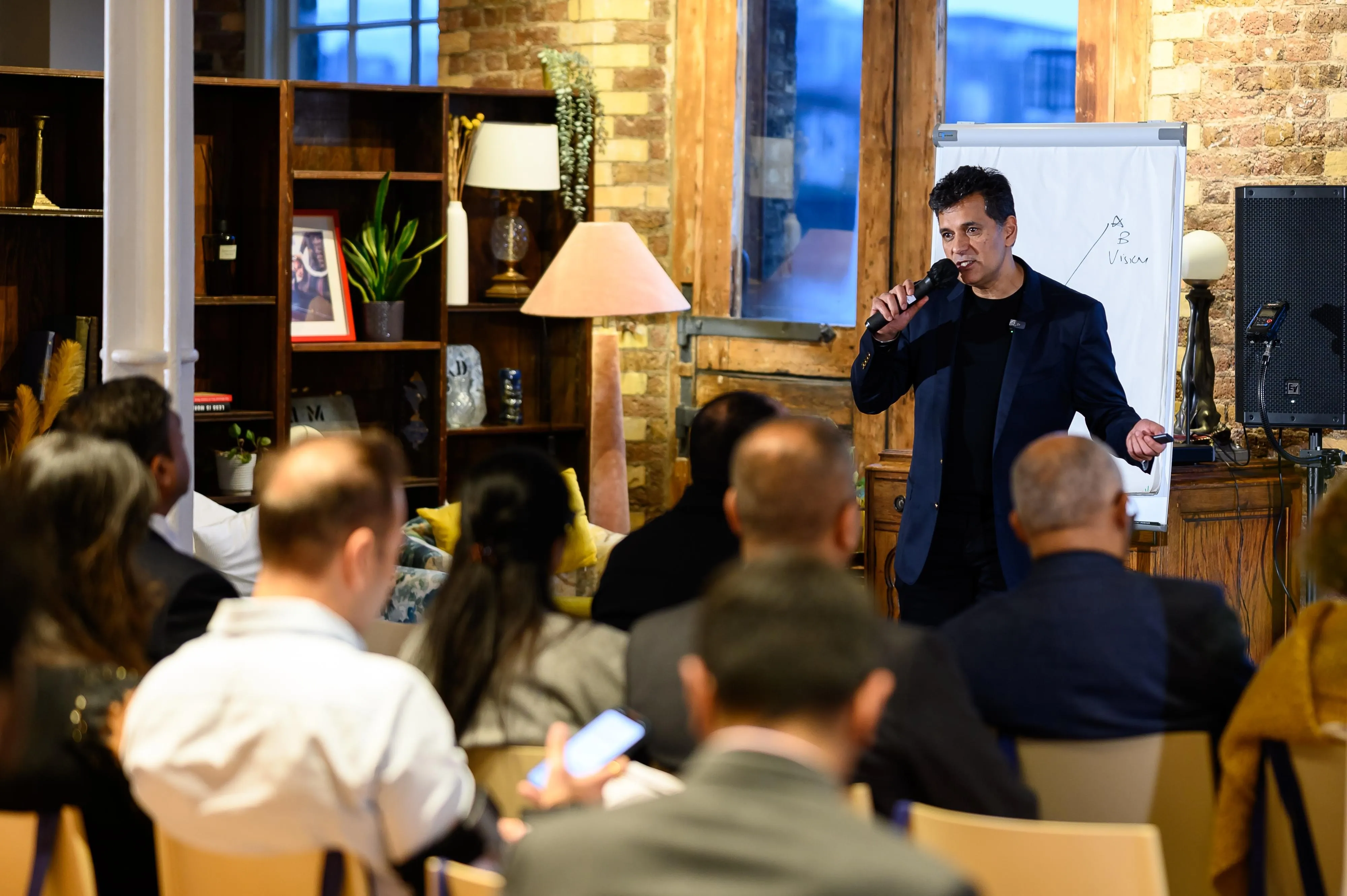
Dr Rahul Doshi has spent more than thirty years in clinical practice and has trained over 7,000 dentists and their teams through The Perfect Smile Advanced Training Institute, which he founded with Dr Bhavna Doshi.
He is a Past President and Board Director of the British Academy of Cosmetic Dentistry, a founding committee member of the British Association of Private Dentistry, and was awarded Most Outstanding Contribution to Dentistry at the Aesthetic Dentistry Awards in 2017. He has served as Clinical Editor of Premium Practice Dentistry and lectures internationally on comprehensive and aesthetic dentistry.
More relevant than any of that: he has planned and delivered the cases you are trying to take on, in his own practices, for decades. This isn't theory. It is judgement built case by case, and shared the same way.
08 / One-to-one clinical mentoring
What Working Together Looks Like
Personalised, structured, and focused entirely on you:
01
Book a mentorship call
Tell us where you are clinically and what you want to be treating in two years.
02
Send over your cases or goals
Records, photographs, radiographs, plans in progress. Sessions are built around these.
03
Meet one to one
Work through planning, sequencing and presentation on your own patients, with feedback you can apply that week.
04
Ongoing Support
Stay connected as you grow into more complex and rewarding cases
09 / Your questions
Frequently Asked Questions
What is clinical mentoring in dentistry?
One to one support from an experienced clinician, built around your own cases rather than a taught syllabus. The focus is judgement: diagnosis, treatment planning, sequencing and case presentation, applied to patients you are actually treating.
How is mentoring different from a course?
A course teaches a method using prepared cases. Mentoring works through your cases, in the order your patients present them, with someone who has planned and delivered that kind of treatment themselves. One builds knowledge. The other builds judgement.
Do I need to be at a certain level first?
You need the individual procedures to be reliable. Mentoring deals with planning, sequencing and presentation rather than hand skills, so it earns its keep once the component parts are solid and putting them together is the challenge.
What kind of cases can we work on?
Comprehensive and interdisciplinary cases, full mouth rehabilitation, aesthetic and smile design work, occlusal problems, and cases that have become complicated mid-treatment. Bring the case that is keeping you awake.
Is this implant mentoring?
No. The focus is comprehensive restorative and cosmetic planning, occlusion and case presentation. Supervised implant placement is a different discipline and other UK mentors specialise in it.
Can I bring a case that has already gone wrong?
Yes, and those sessions tend to be the most valuable. Finding where a case diverged from its plan teaches more than reviewing one that went smoothly.
Who will I be working with?
Dr Rahul Doshi and Dr Bhavna Doshi. They have trained dentists and their teams in smile design, occlusion, treatment planning and full mouth rehabilitation, and they have delivered this work in their own practices rather than only taught it from a lectern.
10 / The next chapter
Bring Us the Case You're Not Sure About
The fastest way to find out whether this helps is to put a real case in front of us. Book a call, bring something you are planning or something that has stalled, and we will work through it with you.
Your next chapter